
Don’t Be A Dope III

Another “Don’t Be A Dope” training poster starring Joe Dope:

Dont be a Dope -  Stuka Attack - Clean You Gun

When the Stukas begin to attack
Ain’t the time to make up for a lack
     Of cleaning your gun -
     Which won’t shoot at a Hun
With a month’s gummy dust on its back!
CLEAN IT EVERY 3 DAYS
 
Don’t be a dope! HANDLE EQUIPMENT RIGHT.
 

How’s Your Dodge, Rog?

“How’s Your Dodge, Rog?” from Army Motors, Chief of Ordnance, August 1944.

Hows Your Dodge, Rog?
 

Don’t Be A Dope II

Another humorous “Don’t be a dope!” poster from WWII.

Don't be a Dope Jeep Poster

Don’t be a dope! Handle Equipment Right!
With an air of complete unconcern // Joe Dope speeds his Jeep ’round a turn // And slams on his brakes //At each stop that he makes — // You’d think we had tires to burn!
 

M55 Quad .50 cal Mount and Trailer

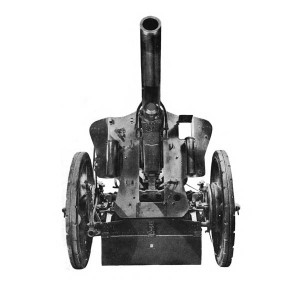
Front and rear views of the M55 quad .50 cal. mount and trailer from ORD 7 SNL G-220: Organizational Spare Parts and Equipment for Mount, Trailer, Multiple Cal. .50 Machine Gun, M55, Ordnance Supply Catalog, Headquarters, Army Service Forces, June 1945.

M55 Multiple .50 cal. Machine Gun Trailer

FIGURE 1—MOUNT, TRAILER, MULTIPLE CAL. .50 MACHINE GUN, M55 (FRONT VIEW)

Continue reading M55 Quad .50 cal Mount and Trailer

M51 Multiple Machine Gun Carriage

Side and rear views of the M51 quad .50 cal. mount and trailer from ORD 7 SNL G-217: Organizational Spare Parts and Equipment for Carriage, Multiple Cal. .50 Machine Gun, M51, Ordnance Supply Catalog, Headquarters, Army Service Forces, October 1944. The M51 was composed of the M17 trailer and the M45 multiple .50 cal. mount.

M51 Antiaircraft Multiple Quad .50 cal. MG Trailer

FIGURE 1—CARRIAGE, MULTIPLE CAL. .50 MACHINE GUN, M51—SIDE VIEW

Continue reading M51 Multiple Machine Gun Carriage

Torpedo Data Computer

Analysis of the torpedo fire control problem and photographs of submarine torpedo data computers from Torpedo Data Computer: Mark 3, Mods. 5 to 12 Inclusive, Ordnance Pamphlet No. 1056, U.S. Navy Department Bureau of Ordnance, Washington, D.C., June 1944:

Torpedo Data Computer

A submarine is equipped with torpedo tubes fwd and aft which are parallel to the longitudinal axis of the ship. When a torpedo is fired it travels in a straight line for a certain distance called the Reach. After it has reached the end of this period of straight line travel, it may be caused to start on a circular course of a definite radius. The length of the circular path is determined by the setting of the gyro in the torpedo and the characteristics of the type of torpedo being used. After travelling in the circular path for a prescribed distance, the torpedo once more assumes a straight path and travels thus until it reaches the target.

The method for controlling the torpedo is by setting the Gyro Angle. It is the function of the Computer to take all of the variable factors into account and determine the value of the Gyro Angle for both fwd and aft torpedoes. The Gyro Angle is continuously generated by the Computer to keep up with the change in the problem due to relative motion of Own Ship and Target.

Submarine Torpedo Aiming and Firing

Continue reading Torpedo Data Computer

Captured Material in North Africa

Analysis of captured German and Italian equipment, particularly newly encountered panzers such as the Tiger tank in Tunisia, remained a priority for Allied intelligence and ordnance teams throughout WWII. The following brief summary of these efforts is taken from “Intelligence Lessons from North Africa, Operation Torch” by the Office of Assistant Chief of Staff, G-2, Allied Force Headquarters, March 1943.

Captured Material

The problem of getting back captured material is a difficult one as fighting units do not have the technical ability to decide what should be sent back and are usually too busy to make the necessary arrangements. In Tunisia, the situation is further complicated as most captured equipment is at once handed over to the French to make up shortages.

The War Department is shortly sending out a team of ordnance personnel trained in the examination of enemy material, to work under the Intelligence Branch at Allied Force Headquarters. It is proposed to have a portion of this team well forward, to be sent to any part of the line where active operations are taking place. They will be responsible for discovering what material has been captured and for ensuring that it is evacuated to the rear as early as possible. The remainder of the team will be at Allied Force Headquarters under the Technical Intelligence officer to arrange for photographs, measurements and dispatch to U.K. or U.S.

It is recommended that similar teams be organized in future for British expeditions with transport including at least one 30 cwt. truck for the removal of material.


Removing Inner Bogie Wheels on Horizontal-Volute Suspension

Instructions for removing the inner bogie wheels on the M4 tank with horizontal-volute spring suspension (HVSS) from Army Motors, Vol. 5, No. 11, February 1945.

SPECIAL TOOLS FOR YOUR NEW H.S./M.F.T.
Meaning: Horizontal-Suspension M-Four Tank. If that is your brand, this SOP is your oyster.

If you’re an M4-series medium tankman. with a new-fangled horizontal-volute suspension to nurse, you’ve a break comin’ that’ll help with your chores. A new set of special tools just issued to the 2nd and higher echelons makes a couple of tough jobs a damn sight easier—to wit, removing the volute springs from the suspensions, and taking off an inner bogie-wheel.

As you know if you’ve seen them, these horizontal-volute suspensions come with two types of tracks—the T66 with all-steel track-shoes, and the T80 with rubber-shod track-shoes. If you’ve got a T66, you can use the riser block as originally designed, but if it’s a T80, be sure to use the modified riser block. Any or all volute springs can be removed while the center bogie-assembly is raised up on the jack. We posed the T66 for the revealing photos that follow.

When you go to remove an inner bogie-wheel, be sure to leave the hub-caps on throughout the job or you’ll have the wheel-bearings full of grime and grit before you know it—and we don’t have to remind you that spells woe. Another thing—if the outer bogie-tire is worn, you’ll be wise to change it before you start to change the inner bogie-wheel. Then you’ll have good clearance between the wheel and hull, and between the wheel and track on the inner wheel. Carry on.

M4 Tank Track Tools
Fig. 1—Here’s all the special tools you need to do either of these exercises: (A) Block, riser, bogie-wheel, Fed. Stock No. 41-B-1411-200 (before modification). (B) Block, riser, bogie-wheel, Fed. Stock No. 41-B-1411-200 (after modification). (C) Adapters, volute-spring removing, Fed. Stock No. 41-A-30-650. (D) Lock, riser-block, Ord. No. B-7080204. Any other tools you’ll use are OVM or common tools found on your M1 Heavy Wrecker.
HVSS Suspension M4 Tank, Figure 2
Fig. 2—To remove the volute spring, first loosen one wheel-bolt on each wheel of the bogie assembly involved. Place riser blocks, one in front of each wheel of the center bogie-assembly, and hunch the tank forward until the bogie-wheels center on the blocks as you see them here.

Continue reading Removing Inner Bogie Wheels on Horizontal-Volute Suspension

Bazooka Oversold?

Comments on the bazooka from Report of the New Weapons Board, Office of the Commanding General, Army Service Forces, Washington, D.C., April 1944.

2.36" Rocket and Launchers

a. The feeling existed in both theaters that the 2.36" rocket had been oversold. This feeling was accompanied by question as to the effectiveness and accuracy of the 2.36" HE AT rocket. In view of this, the Board incorporated a 2.36" rocket show into each demonstration. The entire renovation of the original launcher and rocket was explained. The explanation included a description of the new wagon-wheel pulpit trap and its function. To demonstrate the safety of the launcher, a launcher which had had two rocket motors exploded within the wire-wrapped portion was exhibited. Two bazookas were then fired at a tank at an 80-yd. range. Amazement was expressed by many spectators at the accuracy and results which were obtained by inexperienced rocket operators. Each demonstration included the firing of six rounds, and it was the exception when there were less than six hits.

b. Many types of eye and face protection have been improvised by combat troops using the 2.36" rocket launcher. Some enlisted men use motorcycle goggles. Others use a modified gas mask, the bottom of which has been cut away; still others use the gas mask as issued. One officer stated that he had obtained excellent results with the use of a plexiglass shield attached to the end of the launcher. Some enlisted men are using celluloid or plastic face shields. Some shields are made to cover the eyes only, whereas others cover the entire face. It was reported that the frustrum of a cone, which had been placed on some launchers, does not serve its purpose. It is believed that this problem should be solved completely and that an item which will afford ample face protection at all temperatures should be developed and issued without delay.

c. Brigadier General Arthur H. Rogers, of the North African theater, reported that early in the Italian campaign a number of the 2.36" rockets carried by his men failed to function. General Rogers stated that these rockets had been carried in ammunition carriers, which hold eight rockets, four in back and four in front. He said that these rockets had been carried fins up, with the fins exposed, and that undoubtedly they had been dragged through mud and water. It was General Rogers’ opinion that the rockets which failed to function failed because moisture entered the motor, although he was not certain that the electrical connection had not been loosened. It is believed that in view of this report the 2.36" rocket should be given thorough proof tests for resistance against moisture. General Rogers also told the Board of a new way in which he employed the bazookas of his organization during the early part of the Italian campaign. He said that he formed bazooka hunting teams. These teams employed 10 to 12 bazookas in one group and went hunting at night. He said that their operation was most successful and that the ambushing of stationary German combat vehicles in this fashion was relatively simple. He spoke very highly of the 2.36" rocket and launcher.


Releasing 76mm Shells for Active Duty

A simple trick for improving the 76mm ready racks in the M4 Sherman from Army Motors, February 1945:

Releasing 76mm Shells for Active Duty

UPSIDE-DOWNING YOUR TANK’S READY RACK AND SNAPPING OFF THOSE CLIPS IS WHAT DOES IT

If the 76mm, six-round ready rack or four-round ready rack on your medium tank (in the turret near the gunner’s seat) looks like the one shown in Fig. 1, here’s a simple fix to loosen the ammo.

The end clips (arrow in Fig. 1) hold the shells in the rack good and tight—too tight for fast unloading. So, loosen the top screw and remove the ammo container from the box (Fig. 2). Snap off the clips by bending them back and forth with a pair of pliers or cut the rivets with a sharp chisel. Then turn the box upside down, so the shell holes that were on top are now on the bottom, and slide it back into the rack (Fig. 3).

Repairing M4 Sherman Tank 76mm Ammunition Ready Rack

This is the important thing because inside the shell container there’s a spring that presses down on the shell, holding it firmly. That’s what makes the shell so hard to get out. When the box is turned over, the shell presses on the spring—the pressure’s gone and you can unload lots faster.

There’re several types of six-round ready racks (76mm), so be sure you work this only on the type rack that’s pictured.