-

-
Popular Posts
-
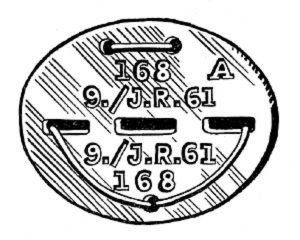 Erkennungsmarke (German Dog Tag)
From Handbook on German Army Identification, U.S. Milit...
Erkennungsmarke (German Dog Tag)
From Handbook on German Army Identification, U.S. Milit...
-
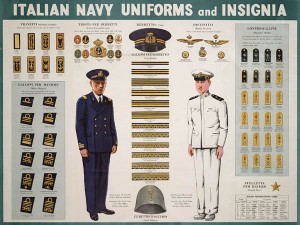 Italian Navy Uniforms and Insignia
:
CON...
Italian Navy Uniforms and Insignia
Italian Navy Uniforms and Insignia:
CON...
-
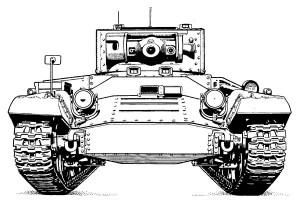 Valentine Tank Illustrations
Front and side views of the Valentine Tank (officially...
Valentine Tank Illustrations
Front and side views of the Valentine Tank (officially...
-
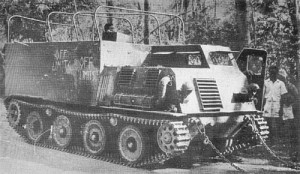 Japanese Type 1 Ho-Ki Armored Personnel Carrier
The Japanese produced a limited number of the innovativ...
Japanese Type 1 Ho-Ki Armored Personnel Carrier
The Japanese produced a limited number of the innovativ...
-
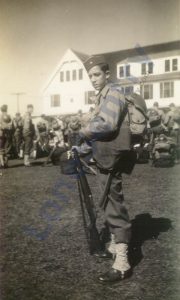 Early-War Uniform
A private photograph from 1942 showing details of the e...
Early-War Uniform
A private photograph from 1942 showing details of the e...
-
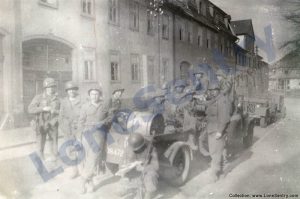 89th Infantry Division in Germany
Photographs of the U.S. Army's 89th Infantry ...
89th Infantry Division in Germany
Photographs of the U.S. Army's 89th Infantry ...
-
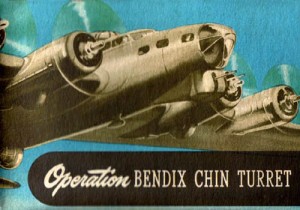 Bendix Chin Turret
Bendix manual on the Operation and Maintenance of the B...
Bendix Chin Turret
Bendix manual on the Operation and Maintenance of the B...
-
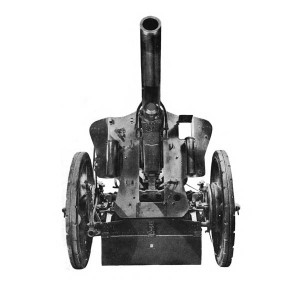 German 105-mm Howitzer
Three views of the German 105-mm howitzer (10.5 cm leFH...
German 105-mm Howitzer
Three views of the German 105-mm howitzer (10.5 cm leFH...
-
 How’s Your Sherman, Herman?
M4 Sherman Tank modification and upgrades from Army Mot...
How’s Your Sherman, Herman?
M4 Sherman Tank modification and upgrades from Army Mot...
-
Category Archives: training
B-17 Ditching Mockup for Training
Details of a unique B-17 Flying Fortress ditching mockup constructed for training by the 396th Bombardment Group RTU at Drew Field, Florida. (Source: Air Sea Rescue Bulletin, U.S. Coast Guard, January 1945.) 396th Bombardment Group RTU Ditching School DescribesMOCKUP FOR … Continue reading
Posted in aircraft, miscellaneous, training
Tagged 396th bg, B-17, ditching, drew field, florida, mockup, training
Comments Off on B-17 Ditching Mockup for Training
Raft Survival of a P-51 Pilot
The story of the rescue of a P-51 Mustang pilot in the Pacific, from Air Sea Rescue Bulletin, U.S. Coast Guard, Vol. III, No. 9, October 1946. Raft Survival of a P-51 Pilot The following report from D of I, … Continue reading
Posted in aircraft, miscellaneous, publications, training
Tagged life raft, P-51, pilot, rescue
Comments Off on Raft Survival of a P-51 Pilot
Captured Tiger Tank Photo Op
The U.S. bazooka and the German Panzerschreck are posed in front of a captured German Tiger tank. (Source: Army Ordnance, Volume 27, No. 145, July-August 1944.) Original caption: The German 88-mm. rocket launcher is shown with the American bazooka beside … Continue reading
75 mm Pack Howitzer M1A1
An overview of the U.S. Army’s 75 mm Pack Howitzer M1A1 from Antitank Weapons, Office of the Chief of Ordnance, Washington, D.C., July 1944. 75 MM PACK HOWITZER MlAl ON CARRIAGE M3A3 The 75 mm Pack Howitzer M1A1 on Carriage M3A3 … Continue reading
Posted in artillery, publications, research, training
Tagged 75mm, artillery, howitzer, pack howitzer
Comments Off on 75 mm Pack Howitzer M1A1
57 mm Gun M1
An overview of the U.S. Army’s 57 mm Gun M1 from Antitank Weapons, Office of the Chief of Ordnance, Washington, D.C., July 1944. 57 MM GUN M1 ON CARRIAGE M1A3 The 57 mm Gun M1 was designed as a light … Continue reading
Subcaliber Gunnery Training
Subcaliber firing was used by the U.S. Army to develop a tank gunner’s accuracy, speed, and confidence without the costs and disturbance of firing the main armament. In general, the coaxial machine gun was used for the subcaliber training for … Continue reading
Posted in armor, miscellaneous, publications, research, training, weapons
Tagged gunnery, m4, sherman, subcaliber, tank, training
Comments Off on Subcaliber Gunnery Training
Replacing M4 Tank Final-Drive Assembly
Instructions for replacing the final-drive assembly on the M4 Sherman tank, from Army Motors, Vol. 6, No. 2, Maintenance Division, Office, Chief of Ordnance, May 1945. Replacing M4 Tank Final-Drive Assemblies Time was when M4 medium tanks with damaged power trains had to … Continue reading
Posted in armor, miscellaneous, publications, research, training
Tagged assembly, drive, final, m4, maintenance, mechanics, tank
Comments Off on Replacing M4 Tank Final-Drive Assembly
Don’t Be A Dope VI
An illustration from the “Don’t be a Dope!” series was included in the M36 tank destroyer technical manual.
M3 Medium Tank Armament
Diagram of the armament and ammunition storage of the M3 Medium Tank. (Source: TM 9-750: Ordnance Maintenance, Medium Tanks M3, M3A1, and M3A2, Technical Manual, U.S. War Department, May 1942.)
P-47 Pilot Preflight Check
P-47N pilot’s preflight check, from: Pilot Training Manual for the Thunderbolt P-47N, Headquarters, AAF Manual 51-127-4, Army Air Forces, Washington, D.C., September 1945. Pilot’s Preflight Check The preflight check starts before you reach your airplane. Survey the proposed taxiing route for … Continue reading
Posted in aircraft, training
Tagged check, inspection, P-47, pilot, preflight, thunderbolt
1 Comment