-

-
Popular Posts
-
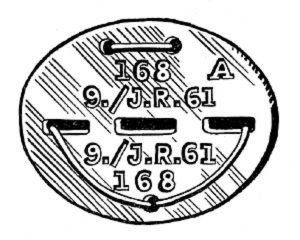 Erkennungsmarke (German Dog Tag)
From Handbook on German Army Identification, U.S. Milit...
Erkennungsmarke (German Dog Tag)
From Handbook on German Army Identification, U.S. Milit...
-
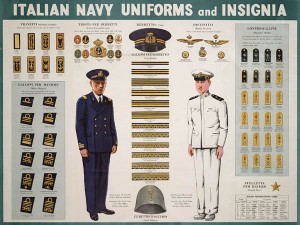 Italian Navy Uniforms and Insignia
:
CON...
Italian Navy Uniforms and Insignia
Italian Navy Uniforms and Insignia:
CON...
-
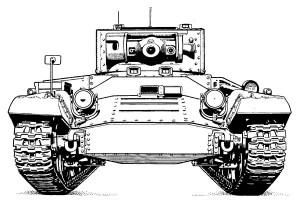 Valentine Tank Illustrations
Front and side views of the Valentine Tank (officially...
Valentine Tank Illustrations
Front and side views of the Valentine Tank (officially...
-
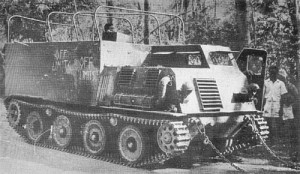 Japanese Type 1 Ho-Ki Armored Personnel Carrier
The Japanese produced a limited number of the innovativ...
Japanese Type 1 Ho-Ki Armored Personnel Carrier
The Japanese produced a limited number of the innovativ...
-
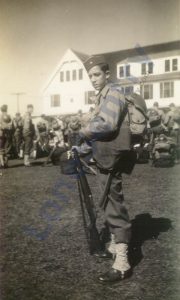 Early-War Uniform
A private photograph from 1942 showing details of the e...
Early-War Uniform
A private photograph from 1942 showing details of the e...
-
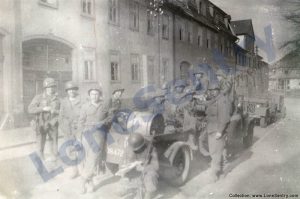 89th Infantry Division in Germany
Photographs of the U.S. Army's 89th Infantry ...
89th Infantry Division in Germany
Photographs of the U.S. Army's 89th Infantry ...
-
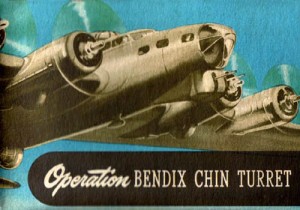 Bendix Chin Turret
Bendix manual on the Operation and Maintenance of the B...
Bendix Chin Turret
Bendix manual on the Operation and Maintenance of the B...
-
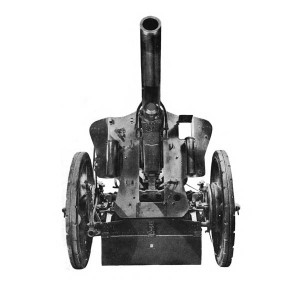 German 105-mm Howitzer
Three views of the German 105-mm howitzer (10.5 cm leFH...
German 105-mm Howitzer
Three views of the German 105-mm howitzer (10.5 cm leFH...
-
 How’s Your Sherman, Herman?
M4 Sherman Tank modification and upgrades from Army Mot...
How’s Your Sherman, Herman?
M4 Sherman Tank modification and upgrades from Army Mot...
-
Tag Archives: publications
WWII Armor Books from Oliver Publishing
Two new WWII armor books from Oliver Publishing have been announced on the Oliver Publishing Group Facebook page: To The Last Bullet: Germany’s War On 3 Fronts. Part 2, Italy and Case Yellow: German Armour in the Invasion of France, … Continue reading
Posted in publications, research
Tagged book, oliver publishing, publications
Comments Off on WWII Armor Books from Oliver Publishing
Panzerwrecks 14: Ostfront 2
Panzerwrecks 14: Ostfront 2 is scheduled for release in December 2012. Feature sections include “Odd StuGs: Ostfront Edition”, “Tehumardi Wrecks”, “Wrecks of Operation Bagration”, and “Panzer Wrecks in the Woods”. Oddities and rare vehicles pictured include Sturmgeschütz III and IV … Continue reading
Posted in news, publications, research
Tagged book, news, ostfront, panzerwrecks, publications, research
Comments Off on Panzerwrecks 14: Ostfront 2
The Secret of the Russians’ Success
Posted in miscellaneous, publications, training
Tagged army, maintenance, motors, publications, success, vehicles
Comments Off on The Secret of the Russians’ Success
Stars and Stripes’ G.I. Stories
Near the end of WW2, Stars and Stripes published a series of “G.I. Stories” of the Ground, Air, and Service Forces in the European Theater of Operations. Each booklet was approximately 32 pages in length and small enough to fit … Continue reading
Posted in miscellaneous, publications
Tagged book, booklet, publications
Comments Off on Stars and Stripes’ G.I. Stories
Panzerwrecks 13 (Italy, Vol. 2)
Panzerwrecks 13: Italy 2, the latest volume in the well known Panzerwrecks photo-book series, has been released by authors Lee Archer and William Auerbach. Photograph features include: Weapons Dump – Italian Style; Nashorn 214; Elefants of 1./s.Pz.Jg.Abt.653; and Dug-in Panther … Continue reading
Posted in armor, publications
Tagged armor, book, italy, panzerwrecks, photos, publications
Comments Off on Panzerwrecks 13 (Italy, Vol. 2)
New WWI and WWII Books from Tankograd
New March 2012 releases from Tankograd Publishing covering WWI and WWII have been announced. Tankograd specializes in publications on military vehicles and military history.
Posted in publications
Tagged book, grabenkrieg, publications, tankograd
Comments Off on New WWI and WWII Books from Tankograd
Me 262 from Valiant Wings
Valiant Wings has published The Messerschmitt Me 262 by Richard Franks. The Messerschmitt Me 262 is the first volume of their new series of aviation books, the “Airframe & Miniature Series”. Me 262 is 116 pages with 40 pages of … Continue reading
Posted in publications
Tagged book, Me 262, publications, valiant wings
Comments Off on Me 262 from Valiant Wings
Most Popular Kindle WWII Books
The Top 10 most popular World War II e-books in 2010 on the Amazon Kindle: Unbroken: A World War II Story of Survival, Resilience, and Redemption by Laura Hillenbrand With the Old Breed at Peleliu and Okinawa by E.B. … Continue reading
The New AR 850-15
Summary of vehicle painting and maintenance instructions from AR 850-15 from Army Motors, Vol. 6, No. 6, September 1945. THE NEW AR 850-15 The law on “Miscellaneous—Motor Vehicles” gets a major overhaul for the first time in two years. This’ll help you get … Continue reading
Posted in miscellaneous, publications
Tagged AR 850-15, maintenance, miscellaneous, olive drab, paint, publications, regulations
Comments Off on The New AR 850-15
Antiairborne Defense
A guide to defense against airborne troops from Cavalry Mechanized Reconnaissance Squadron, Cavalry Field Manual FM 2-30, U.S. War Department, Washington, DC, March 1943: ANTIAIRBORNE DEFENSE The reconnaissance squadron is a highly effective agency in the scheme of antiairborne defense as … Continue reading
Posted in miscellaneous, publications, research, training
Tagged cavalry, field manual, FM, manual, publications, training
1 Comment