-

-
Popular Posts
-
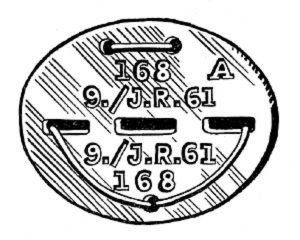 Erkennungsmarke (German Dog Tag)
From Handbook on German Army Identification, U.S. Milit...
Erkennungsmarke (German Dog Tag)
From Handbook on German Army Identification, U.S. Milit...
-
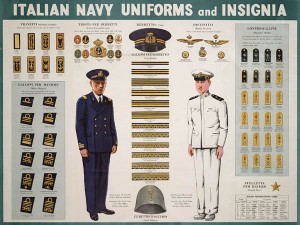 Italian Navy Uniforms and Insignia
:
CON...
Italian Navy Uniforms and Insignia
Italian Navy Uniforms and Insignia:
CON...
-
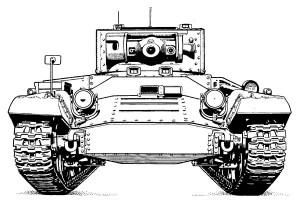 Valentine Tank Illustrations
Front and side views of the Valentine Tank (officially...
Valentine Tank Illustrations
Front and side views of the Valentine Tank (officially...
-
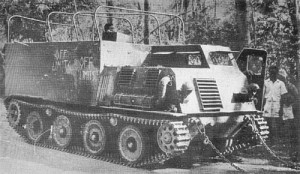 Japanese Type 1 Ho-Ki Armored Personnel Carrier
The Japanese produced a limited number of the innovativ...
Japanese Type 1 Ho-Ki Armored Personnel Carrier
The Japanese produced a limited number of the innovativ...
-
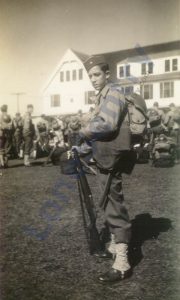 Early-War Uniform
A private photograph from 1942 showing details of the e...
Early-War Uniform
A private photograph from 1942 showing details of the e...
-
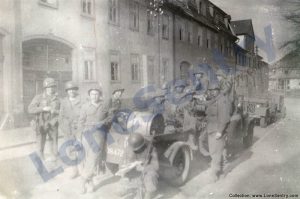 89th Infantry Division in Germany
Photographs of the U.S. Army's 89th Infantry ...
89th Infantry Division in Germany
Photographs of the U.S. Army's 89th Infantry ...
-
 Bendix Chin Turret
Bendix manual on the Operation and Maintenance of the B...
Bendix Chin Turret
Bendix manual on the Operation and Maintenance of the B...
-
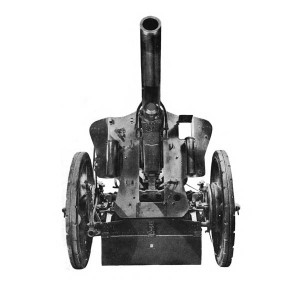 German 105-mm Howitzer
Three views of the German 105-mm howitzer (10.5 cm leFH...
German 105-mm Howitzer
Three views of the German 105-mm howitzer (10.5 cm leFH...
-
 How’s Your Sherman, Herman?
M4 Sherman Tank modification and upgrades from Army Mot...
How’s Your Sherman, Herman?
M4 Sherman Tank modification and upgrades from Army Mot...
-
Tag Archives: B-17
B-17 Ditching Mockup for Training
Details of a unique B-17 Flying Fortress ditching mockup constructed for training by the 396th Bombardment Group RTU at Drew Field, Florida. (Source: Air Sea Rescue Bulletin, U.S. Coast Guard, January 1945.) 396th Bombardment Group RTU Ditching School DescribesMOCKUP FOR … Continue reading
Posted in aircraft, miscellaneous, training
Tagged 396th bg, B-17, ditching, drew field, florida, mockup, training
Comments Off on B-17 Ditching Mockup for Training
Delayed Action
Strange tale (tail?) from Air Force, April 1943. DELAYED ACTION CREWMEN of a B-17 had a surprise recently while flying over a quiet sector of England when a 20 mm. shell exploded in the left horizontal stabilizer. They had reason … Continue reading
Posted in aircraft, combat reports
Tagged 20mm, air force, aircraft, B-17, combat reports, offbeat
Comments Off on Delayed Action
Wings of Freedom Tour Visits New Orleans
The Wings of Freedom Tour visits New Orleans with vintage aircraft including P-51 Mustang, Consolidated B-24 Liberator “Witchcraft”, and Boeing B-17 Flying Fortress “Nine O Nine”. The Collings Foundation’s Wings of Freedom Tour will be at Lakefront Airport from March … Continue reading
Words from the Wing Wise
Tips from bomber gunners to prevent guns and gunners from freezing during missions from a special edition of Army Talks, “Stars over the Reich,” published for the officers and men of the Eighth Air Force. WORDS FROM THE WING … Continue reading
Posted in aircraft, publications, weapons
Tagged army talks, B-17, bomber, crew, Eighth Air Force, gun, gunner
Comments Off on Words from the Wing Wise
Give Us More B-17’s
A dynamic U.S. Army poster from WWII recounting a successful mission by the B-17 Flying Fortress in Europe against the Luftwaffe.
Idiots’ Delight
Color photograph of the B-17 Flying Fortress “Idiots’ Delight” of Eighth Air Force in England. The original caption states the M/Sgt is Penrose A. Bingham of Reading, Pennsylvania. The B-17 “Idiots’ Delight” served with the 332nd Bomb Squadron, 94th Bomb … Continue reading
Posted in aircraft, photos
Tagged aircraft, B-17, bomber, color, idiots delight, nose art, photos
4 Comments
B-17 “Chuckie” Moves to Military Aviation Museum
The B-17 Flying Fortress “Chuckie” is moving from the Vintage Flying Museum in Fort Worth, Texas to the Military Aviation Museum in Virginia Beach, Virginia. The B-17 “Chuckie” was used for cropdusting until 1979. Owned by Chuckie Hospers, the B-17 … Continue reading