
-

-
Popular Posts
-
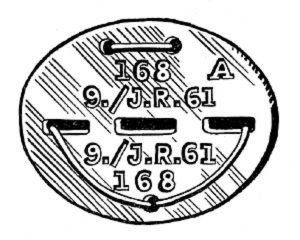 Erkennungsmarke (German Dog Tag)
From Handbook on German Army Identification, U.S. Milit...
Erkennungsmarke (German Dog Tag)
From Handbook on German Army Identification, U.S. Milit...
-
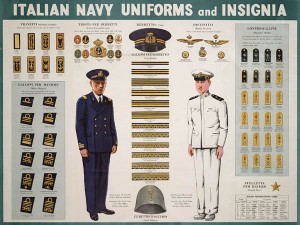 Italian Navy Uniforms and Insignia
:
CON...
Italian Navy Uniforms and Insignia
Italian Navy Uniforms and Insignia:
CON...
-
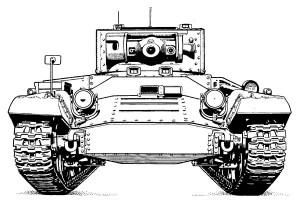 Valentine Tank Illustrations
Front and side views of the Valentine Tank (officially...
Valentine Tank Illustrations
Front and side views of the Valentine Tank (officially...
-
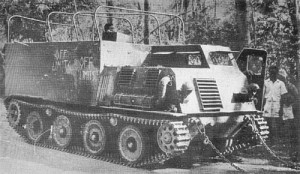 Japanese Type 1 Ho-Ki Armored Personnel Carrier
The Japanese produced a limited number of the innovativ...
Japanese Type 1 Ho-Ki Armored Personnel Carrier
The Japanese produced a limited number of the innovativ...
-
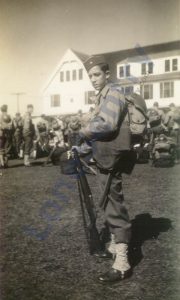 Early-War Uniform
A private photograph from 1942 showing details of the e...
Early-War Uniform
A private photograph from 1942 showing details of the e...
-
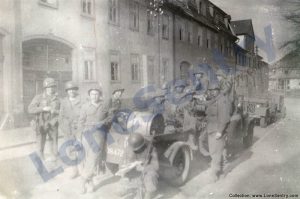 89th Infantry Division in Germany
Photographs of the U.S. Army's 89th Infantry ...
89th Infantry Division in Germany
Photographs of the U.S. Army's 89th Infantry ...
-
 Bendix Chin Turret
Bendix manual on the Operation and Maintenance of the B...
Bendix Chin Turret
Bendix manual on the Operation and Maintenance of the B...
-
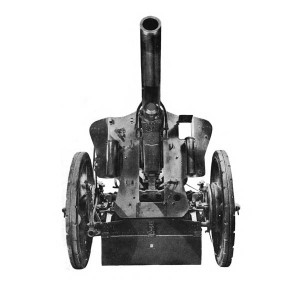 German 105-mm Howitzer
Three views of the German 105-mm howitzer (10.5 cm leFH...
German 105-mm Howitzer
Three views of the German 105-mm howitzer (10.5 cm leFH...
-
 How’s Your Sherman, Herman?
M4 Sherman Tank modification and upgrades from Army Mot...
How’s Your Sherman, Herman?
M4 Sherman Tank modification and upgrades from Army Mot...
-
Tag Archives: panzer
Captured Tiger Tank Photo Op
The U.S. bazooka and the German Panzerschreck are posed in front of a captured German Tiger tank. (Source: Army Ordnance, Volume 27, No. 145, July-August 1944.) Original caption: The German 88-mm. rocket launcher is shown with the American bazooka beside … Continue reading
Captured Panzer IIIs
U.S. War Department’s Tactical and Technical Trends (No. 32, August 26, 1943) featured these photographs of a pair of German Panzer III tanks captured in North Africa.
Posted in armor, combat reports, intelligence reports, publications, weapons
Tagged armor, panzer, panzer iii
Comments Off on Captured Panzer IIIs
MiniArt Pz.Kpfw. III Ausf. C
From MiniArt, a kit in process announcement of a rare 1/35th-scale panzer variant from WWII: No. 35166: Pz.Kpfw. III Ausf. C. Announced features include: all new tooling; 1,171 total parts (1,047 plastic parts, 63 PE parts, 11 clear plastic parts); decals for five … Continue reading
Dragon Panzerkampfwagen T34-747(r)
Dragon Models has announced a new release depicting a captured Russian T-34 in German service: Item No: 6449: Panzerkampfwagen T34-747(r). The model kit includes the Rommelkist turret bin added to many captured T-34s by the Germans.
DEF Model Pz.Kpfw. 35t Detail Kit
DEF Model has announced a 1/35th German armor detail kit for the Academy Pz.Kpfw. 35t: DM35026: Pz.Kpfw. 35t Detail Up Set with Stowage (for Academy 1/35). The kit includes a total of 24 resin parts, 2 PE plate, and 1 brass … Continue reading
Posted in armor, scale models
Tagged czech, DEF Model, german, panzer, panzer 38t
Comments Off on DEF Model Pz.Kpfw. 35t Detail Kit
Alkett Jagdpanzer IV/70(A)
#6784 1/35 Pz.Kpfw.IV L/70(A) Final Production — the feature poster for Dragon’s 1/35th-scale kit of the Alkett Jagdpanzer IV/70(A) has been posted at Dragon.
Posted in scale models
Tagged alkett, dragon, jagdpanzer, panzer, panzer iv
Comments Off on Alkett Jagdpanzer IV/70(A)
Panzer IV Color Photo
Rare color photograph of a camouflaged Panzer IV knocked out in Normandy in 1944. From the markings and camouflage, the Panzer IV appears to be from the German Panzer Lehr Division. U.S. Air Force Photo.
26th Panzer Division
The following opinions are from German General Leutnant Linnarz, commander of the German 26th Panzer Division in Italy, concerning Allied airpower and its effects on German forces. Source: Defeat, Headquarters Army Air Forces, Office of the assistant chief of air … Continue reading
Posted in combat reports, intelligence reports, research
Tagged 26th, air power, italy, Linnarz, panzer, research
Comments Off on 26th Panzer Division
Trying to Capture an Intact Tiger in Tunisia
Brief note on British attempts to capture an intact German Tiger I tank in Tunisia from “The Royal Electrical and Mechanical Engineers in Action”, Military Review, Vol. 23. Presumably, this Tiger is #231 of sPzAbt. 501 which was initially captured by the British … Continue reading
Posted in armor, intelligence reports, miscellaneous
Tagged engineers, panzer, recognition, REME, spzabt 501, tiger, tunisia
1 Comment
Dragon Flakpanzer IV Ausf. G “Wirbelwind”
New WWII 1/35th armor kit announcement from Dragon — Kit No. 6565: 1/35th Flakpanzer IV Ausf. G “Wirbelwind” Early Production with Zimmerit.