
Support the Site:

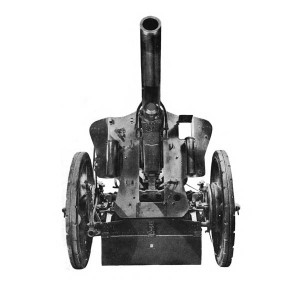
German 105-mm Howitzer

Three views of the German 105-mm howitzer (10.5 cm leFH 18, leichte FeldHaubitze) from the U.S. War Department technical manual TM E9-325A: German 105-mm Howitzer Materiel, June 1944.

German 105-mm Howitzer and Carriage, Firing Position

German 105-mm Howitzer and Carriage, Firing Position

Continue reading German 105-mm Howitzer

WWII 105mm Howitzer M2A1 from AFV Club

Further artwork and details have been released by AFV Club on their upcoming 1/35th scale release of the U.S. WWII 105mm Howitzer M2A1 & Carriage (Kit No. AF 35160).

U.S. M2A1 105-mm Howitzer World War II
 

OP and CP Security

Observation post and command post security from Combat Lessons, No. 7:

U.S. Army WW2 Observation Post

OP and CP Security

Even at this late date, needless casualties, delays, and expenditures of effort are being caused by breaches of OP and CP security rules. The inevitable results of security carelessness are pointedly illustrated by the three following incidents.

Carelessness Costs Lives

Reported by Technician Fifth Grade Ernest J. Langle, 135th infantry: “We stayed in one CP for 2 weeks without drawing a shell and felt quite secure, for we had been told that the enemy hadn’t been shelling in that particular vicinity for the past 30 days. Eventually, however, a few of the men either forgot or disregarded their instructions. They washed some white towels and shirts and hung them out to dry—an effective signal for enemy artillery fire upon our CP. Three of our men were killed in the shelling that followed this breach of security.”

Learning Security the Hard Way

Reported by an Infantry Battalion Commander, ETO: “After being shelled out of two CP locations (the first time with severe casualties) we reorganized a sadly depleted CP group and opened for business in another building. A third-story battalion OP in the same building could be reached only by passing a large open window on a stair landing. Since the entire village was under enemy observation and direct fire, it was necessary to crawl past this open window. To insure that this would be done, a sentry was stationed in the stairway. All went well until it was discovered that the Sergeant Major had just covered the opening with a huge sheet of tin ‘so that the sentry could be released for work with the wire team.’ We abandoned the CP in haste and moved to an already established alternate CP (the only remaining location in the town). The last men had hardly left the building before it was taken under direct artillery fire and rapidly disintegrated.

“This incident thoroughly impressed our personnel with the folly of signalling OP and CP locations to the enemy by altering the outward appearance of a building after occupancy. That particular error was not repeated.”

One Mistake Is Too Many

Reported by the Commanding General, 1st Infantry Division: “Officers visiting front-line units should be warned against actions that might reveal to the enemy the locations of our installations.

“In one case, an observation post was located in a wrecked building. Inside walls of the rooms had been camouflaged to give a dark background, instruments had been set well back in the rooms, the observers were careful to move about only in the shadows. All went well until the day when some visiting officers stopped by. They moved about freely, even leaning out of the windows with their field glasses. Within half an hour, the building was completely destroyed by enemy fire. One of our observers was killed.”

Officer Observation Post

You sure have a fine view from this OP, Sergeant.


Panzerbeobachtungswagen III

Panzerbeobachtungswagen III (Pz Beob Wg III) were German armored, fully-tracked artillery observation vehicles developed on obsolete PzKpfw. III chassis. The hull machine gun and main armament were removed to allow more interior space for radios and equipment. A single machine gun was mounted in the center of the mantlet alongside dummy armament. Approximately 260 Panzer III chassis were modified from Feb. 1943 to April 1944.

The following photographs of Panzerbeobachtungswagen III were included in a confidential SHAEF intelligence publication on German tanks: Summary of German Tanks in Photographs, Office of Assistant Chief of Staff, G-2, Supreme Headquarters Allied Expeditionary Force, October 1944.

Pz III Beob Wg Beobachtungswagen WWII

Panzerbeobachtungswagen III

Panzer III Beobachtungswagen

WW2 Pzkpfw III Artillery Observation Post
 

120mm Granatwerfer 42 Mortar

U.S. troops demonstrate a captured Granatwerfer 42 (12cm GrW 42) German heavy mortar on the First Army Front in Echtz, near Duren, Germany.


Artillery Against Siegfried Line Pillboxes

The following combat report by the 258th Field Artillery Battalion described the effect of short-range 155-mm artillery fire against the pillboxes of the Siegfried Line.

HEADQUARTERS, 258TH FIELD ARTILLERY BATTALION

APO 230, U.S. Army
5 October 1944

SUBJECT: Destruction of concrete pillboxes by short range fire from M12, 155mm Gun, SP.
TO: Commanding General, XIX Corps, APO 270, U.S. Army

1. Between 26 September 1944 and 2 October 1944 this battalion was assigned to the mission of methodical destruction of all pillboxes which could be located on the front or immediate flanks of the impending attack on the Siegfried Line by the 30th Division.

2. During this period intensive aerial and ground reconnaissance, in conjunction with aerial photo study, revealed 49 pillboxes as potential observable targets.

3. Of this number 43 were attacked by short range M12 fire, 1 by direct fire and 2 by 3″ guns of Co A, 823d TD Bn. M12 adjusted using fuze delay, switching to T105 fuze on obtaining the first target shot. The TD company commander fired using one gun, direct laying, firing both HE with fuze CB, and armor piercing shot. Evidence of penetration was obtained on all 46 targets above. For details of each mission, see accompanying annex.

4. Firing was terminated only on evidence that a penetration has been obtained. It has not yet been possible to verify by close-up examination of the targets whether penetration was accomplished in every instance.

Continue reading Artillery Against Siegfried Line Pillboxes

Japanese Rockets and Launchers

The following U.S. intelligence report on Japanese spin-stabilized rockets and launchers was published in Enemy on Luzon: An Intelligence Summary:

ARMY 20-CM SPIN STABILIZED ROCKET AND TYPE 4 LAUNCHER:

Several of these projectiles, the first Army rockets recovered, and the Type 4 launcher, were used against our troops in the Manila area and east of Manila. The date of manufacture, late 1944, emphasized the trend toward increased use of rockets by the enemy.

In general appearance the launcher was similar to a large trench mortar. It incorporated traversing mechanism in the bipod and employed standard mortar fire-control devices. The tube, 20.3-cm inside diameter and 75 and 5/8 inches long, was open at both ends and contained a hinged opening for insertion of the rocket. It was fired with a 25-foot lanyard attached to a pull igniter.

Japanese WWII Army 20-cm SS Rocket and Type 4 Launcher

Army 20-cm SS Rocket and Type 4 Launcher

The explosive head was a thin-walled tube containing nose fuze, booster and filling of cast TNT. The motor threaded onto the explosive head and was equipped with six nozzles canted 25 degrees. The propellant was ballistite ignited by a black powder charge located just forward of the igniter, which screwed into the motor base plate. Projectile and motor had a combined weight of approximately 185 pounds.

Japanese WW2 Army 20-cm SS Rocket and Type 4 Launcher (Firing)

Army 20-cm SS Rocket and Type 4 Launcher (Firing)

The rocket was stable in flight, exploded high order, and had an approximate range of 3,200 yards at 800 mils.

Continue reading Japanese Rockets and Launchers

German Large Caliber Artillery

Table of German heavy artillery in World War II from Catalog of Enemy Ordnance, U.S. Office of Chief of Ordnance, 1945.


Gun*Type of Carriage and TraverseWeight of Equip­ment (lb.)Length of Barrel in CalibersPROJECTILERemarks
Max. Range (yds.)Muzzle Vel. (ft./sec.)Type**Weight (lbs.)
15 cm K. in Mrs. Laf.  4526,0002,730H.E. (15 cm K. gr. 18)94.6Probably used on platform for coast defense
15 cm K. 18 (149 mm)Mod. Box Trail 12°28,4595527,0402,840H.E. (15 cm K. gr. 18)94.6 
15 cm K. 39 (149 mm)Split Trail 60°27,28055.427,0402,840H.E. (15 cm K. gr. 18)94.6Probably mfd. by Krupp
17 cm K. in Mrs. Laf. 18Mod. Box Trail 16°38,5005032,3703,035H.E.B.C. (17 cm K. gr. 38 Hb.)138Krupp, Essen
21 cm Mrs. 18Mod. Box Trail 16°36,7003118,3001,854H.E. (21 cm gr. 18)249Krupp, Essen
21 cm K. 38Field 360°78,0005037,2002,870H.E. (21 cm K. gr. 38)265360° on platform. Krupp, Essen
21 cm K. 39Field 360°74,8004532,8002,620H.E. (21 cm gr. 40)278Skoda design
21 cm K. 39/40
21 cm K. 39/41
       Both reported to be very similar to 21 cm K. 39
21 cm K. 42   37,0002,820  Muzzle brake fitted
24 cm H. 39Field 360°59,4002819,7001,970H.E. (24 cm gr. 39)365Skoda design similar to 21 cm K. 39
24 cm H. 39/40       Later version of 24 cm H. 39
24 cm K. 3 (238 mm)119,00046
(55?)
41,0003,248H.E. (24 cm gr. 35)331 
24 cm K. 18 (238 mm)Field 6°118,8005540,5003,180 332Fires splined projectile, Rheinmetal Borsig
28 cm H.L./12Static 360°111,0001211,4001,150H.E. (28 cm Spr. gr. L./3.5 m. Bdz.)770Uses DeBange Type obturator. Obsolete except for coastal defense
28 cm Kst. H.Static 360°81,5001212,5001,243H.E. (28 cm Sprgr. L./3.5 m. Bdz.)770Similar to 28 cm. H.L./12. Fires same projectile
35.5 cm M. 1Field165,000 21,9001,870Anticoncrete (35.5 cm gr. Be.)825 
42 cm Gamma Mrs.Static 45°308,0001615,5001,485Anticoncrete (s. Gr. Be.)2,249
2,253
Similar to last war equipment
61.5 cm Mrs. 264,000815,3001,380Anticoncrete (gaschosse L./4.1 für Karl gerät)4,400Reported to have an auxiliary 54 cm barrel
15 cm K. (E)Rly. 360°167,0004025,2002,800H.E. (15 cm K. gr. 18)94.6Naval design. Krupp. Same projectile as 15 cm K. 18
17 cm K. (E)Rly. 360°176,0004029,2002,870H.E.B.C. (17 cm Sprgr. L./4.7 Kz. m. Hb.)138Naval design. Krupp
20 cm K. (E) (203 mm)Rly. Turntable 360°189,5005540,0003,030H.E.B.C. (20.3 cm Sprgr. L./4.7 m. Hb.)247Naval design. Also known as 20 cm S. K. C./34
21 cm K. 12 (E)Rly.744,000196131,0005,330H.E.B.C. (21 cm gr. 35 m. Hb.)236Splined projectile. Differences are not known
21 cm K. 12V (E)Rly.       
21 cm K. 12N (E)Rly.      Believed to involve an alteration of the rifling
24 cm Th. Br. K (E) (238 mm)Rly. 1°207,0003522,2002,210H.E.B.C. (24 cm Sprgr. L./4.5 Bdz. u Kz. m. Hb. ung)328Sister piece to “Theodor Kanone”
24 cm Th. K. (E) (238 mm)Rly.209,00040
(48?)
29,0002,660H.E.B.C. (24 cm Sprgr. L./4.2 m. Bdz. u Kz. m. Hb.)330“Theodor Kanone” Naval design
28 cm Ks. Br. K. (E)Rly.262,0004032,3002,690H.E.B.C. (28 cm Sprgr. L./4.1 Kz. m. Hb.)529Naval design. Carriages are believed to be very similar
28 cm lg. Br. K. (E)Rly.271,0004540,5002,820H.E.B.C. (28 cm Sprgr. L./4.4 m. Bdz. u Kz. m. Hb.)626Naval design. Carriages are believed to be very similar
28 cm s. Br. K. (E)Rly.286,0005040,5002,880H.E.B.C. (28 cm Sprgr. L./4.4 m. Bdz. u Kz. m. Hb.)626Naval design. Carriages are believed to be very similar
28 cm Br. N. K. (E)Rly.330,000 50,2003,260H.E.B.C. (28 cm Gr. 39 m. Hb.)496Probably splined projectile
28 cm K. 5 (E)Rly. 1° Turntable 360°480,0007663,0003,670H.E.B.C. (28 cm Gr. 35)550Weight does not include turntable. Fires splined projectile. Also reported to fire a rocket assisted shell (28 cm R. Gr. L/4.7) with range of 53 miles.
28 cm K. 5/1 (E)     H.E.B.C. (28 cm Gr. 42) Differences from 28 cm K5 are unknown
28 cm K. 5/2 (E)     H.E.B.C. (28 cm Gr. 42) Differences from 28 cm K. 5 are unknown
38 cm Siegfried K. (E)Rly. Turntable 360° 55
(52?)
61,0003,450H.E.B.C. (38 cm Sprgr. L./4.5) (Si)1,096Naval design. Also fires a 1,764 lb. shell with maximum range of 46,000 yds.
40 cm K. (E) (406 mm)Rly.710,0005049,0003,450
2,790
H.E. (40 cm gr. 40)1,320
2,100
Naval design—Adolf. K.
80 cm Gustav Geschütz 2,750,0003551,500  16,700 

* Almost all the data given have not been verified by tests performed by any Allied government and information from sources available varies considerably in reliability and degree of confirmation.
** Of the several types of projectiles fired by each weapon, only one believed to give maximum range is listed.

21 cm Mrs. 18:
21 cm Mrs. mit Mrs. Laf. 18: Heavy Howitzer

20 cm K. (E) (203 mm):
20 cm K. (E): Railway Gun


The Artillery Jeep Plane

From “Combat Lessons” No. 4 comes this tribute to the U.S. artillery spotter planes in World War II:

The Artillery “Jeep Plane” Colonel Russell P. Reeder, Infantry Regimental Commander, Normandy.

“When our division commander asked us what we wanted our reply was ‘Keep those artillery jeep planes in the air.’

“These planes were the most effective means of stopping German artillery fire on our troops. We would be taking a real pasting from their artillery until one of these planes would show up skittering across the sky. Immediately the German artillery would stop firing. After one or two incautious enemy batteries had continued to fire and disclosed their position to the air observer, with ‘sudden death’ results, the others learned that discretion is the better part of valor.

Artillery Jeep Plane

“Even their mortars respected the eagle eye of the jeep plane and would suspend fire rather than risk detection of their positions.”

COMMENT: This disinclination of German artillery to fire under the threat of disclosing their positions to air observers has also been reported from both Sicily and Italy.


128th Armored Field Artillery Photos

6th Armored Division Patch128th Armored Field Artillery Battalion   John Glascock has uploaded over 300 black-and-white and color WWII photos of the 128th Armored Field Artillery Battalion, 6th Armored Division:

Noteworthy color photographs include Red Cross Clubmobile “Atlanta”, Piper Cub, Jeep Repairs, and USO Entertainment.