-

-
Popular Posts
-
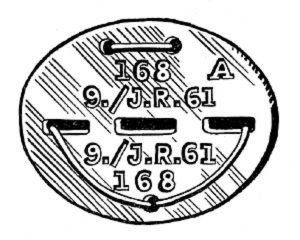 Erkennungsmarke (German Dog Tag)
From Handbook on German Army Identification, U.S. Milit...
Erkennungsmarke (German Dog Tag)
From Handbook on German Army Identification, U.S. Milit...
-
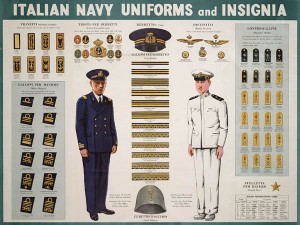 Italian Navy Uniforms and Insignia
:
CON...
Italian Navy Uniforms and Insignia
Italian Navy Uniforms and Insignia:
CON...
-
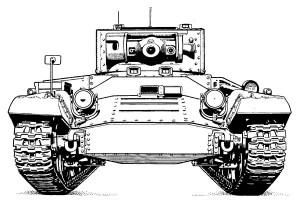 Valentine Tank Illustrations
Front and side views of the Valentine Tank (officially...
Valentine Tank Illustrations
Front and side views of the Valentine Tank (officially...
-
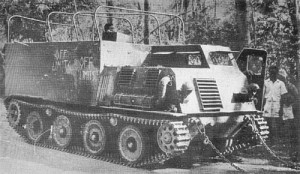 Japanese Type 1 Ho-Ki Armored Personnel Carrier
The Japanese produced a limited number of the innovativ...
Japanese Type 1 Ho-Ki Armored Personnel Carrier
The Japanese produced a limited number of the innovativ...
-
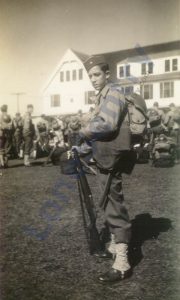 Early-War Uniform
A private photograph from 1942 showing details of the e...
Early-War Uniform
A private photograph from 1942 showing details of the e...
-
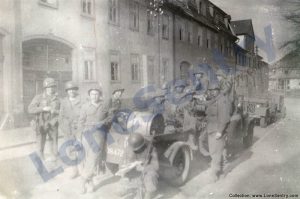 89th Infantry Division in Germany
Photographs of the U.S. Army's 89th Infantry ...
89th Infantry Division in Germany
Photographs of the U.S. Army's 89th Infantry ...
-
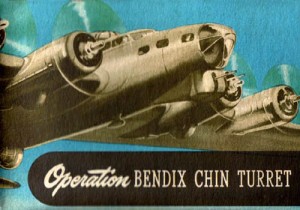 Bendix Chin Turret
Bendix manual on the Operation and Maintenance of the B...
Bendix Chin Turret
Bendix manual on the Operation and Maintenance of the B...
-
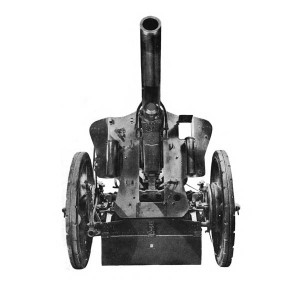 German 105-mm Howitzer
Three views of the German 105-mm howitzer (10.5 cm leFH...
German 105-mm Howitzer
Three views of the German 105-mm howitzer (10.5 cm leFH...
-
 How’s Your Sherman, Herman?
M4 Sherman Tank modification and upgrades from Army Mot...
How’s Your Sherman, Herman?
M4 Sherman Tank modification and upgrades from Army Mot...
-
Category Archives: miscellaneous
B-17 Ditching Mockup for Training
Details of a unique B-17 Flying Fortress ditching mockup constructed for training by the 396th Bombardment Group RTU at Drew Field, Florida. (Source: Air Sea Rescue Bulletin, U.S. Coast Guard, January 1945.) 396th Bombardment Group RTU Ditching School DescribesMOCKUP FOR … Continue reading
Posted in aircraft, miscellaneous, training
Tagged 396th bg, B-17, ditching, drew field, florida, mockup, training
Comments Off on B-17 Ditching Mockup for Training
In the Hedgerows of Normandy…
Advertisement from Laplant-Choate featuring the bulldozer blade mounted on the M4 tank, from Army Ordnance, Vol. XXVII, No. 147, November-December 1944.
“Major” – The Parachuting St. Bernard
The brief story of “Major,” a St. Bernard who made six successful parachute jumps up to 26,000 feet, from Air Sea Rescue Bulletin, U.S. Coast Guard, No. 2, July 1944. Wright Field has also designed a dog parachute harness which … Continue reading
Posted in miscellaneous
Tagged dog, harness, parachute, rescue, st bernard, wright field
Comments Off on “Major” – The Parachuting St. Bernard
Raft Survival of a P-51 Pilot
The story of the rescue of a P-51 Mustang pilot in the Pacific, from Air Sea Rescue Bulletin, U.S. Coast Guard, Vol. III, No. 9, October 1946. Raft Survival of a P-51 Pilot The following report from D of I, … Continue reading
Posted in aircraft, miscellaneous, publications, training
Tagged life raft, P-51, pilot, rescue
Comments Off on Raft Survival of a P-51 Pilot
Meet the Dragon Wagon
“Meet the Dragon Wagon,” advertisement for B.F. Goodrich truck and bus tires, 1944.
Posted in miscellaneous, publications
Tagged advertisement, dragon wagon, goodrich, vehicles
Comments Off on Meet the Dragon Wagon
Continental Red Seal Engines
Advertisement for Continental Red Seal Engines, the Power to Win.
Posted in armor, miscellaneous
Tagged advertisement, continental, engine, red seal
Comments Off on Continental Red Seal Engines
Here Come the Shermans!
“Here Come the Shermans!”, a 1944 advertisement for American Steel Foundries.
Posted in armor, miscellaneous
Tagged advertisement, american steel, m4, sherman, tank
Comments Off on Here Come the Shermans!
Misc. Photo Set: Hamburg, Bleckede & Rhineland
Miscellaneous photographs from an unknown U.S. Army unit in Belgium and Germany during WWII. Locations include Bleckede, Hamburg, and Mannheim along with the Rhine River and Elbe River. Written on back of photo: “German PWs along Rhine”.
Ambulances and Medical Vehicles
A variety of Italian and German ambulances and medical vehicles are parked outside an Allied prisoner-of-war camp in Italy in 1945, from a photo collection of the U.S. 345th Engineers.