-

-
Popular Posts
-
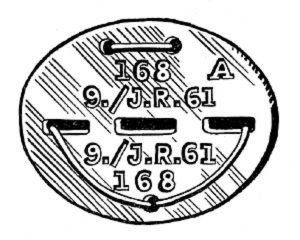 Erkennungsmarke (German Dog Tag)
From Handbook on German Army Identification, U.S. Milit...
Erkennungsmarke (German Dog Tag)
From Handbook on German Army Identification, U.S. Milit...
-
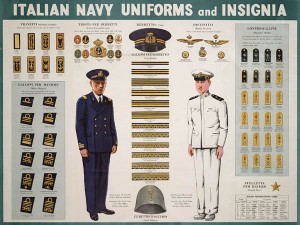 Italian Navy Uniforms and Insignia
:
CON...
Italian Navy Uniforms and Insignia
Italian Navy Uniforms and Insignia:
CON...
-
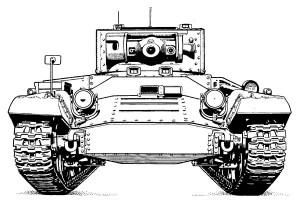 Valentine Tank Illustrations
Front and side views of the Valentine Tank (officially...
Valentine Tank Illustrations
Front and side views of the Valentine Tank (officially...
-
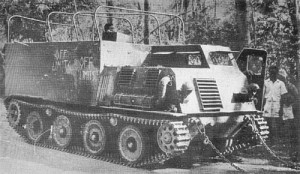 Japanese Type 1 Ho-Ki Armored Personnel Carrier
The Japanese produced a limited number of the innovativ...
Japanese Type 1 Ho-Ki Armored Personnel Carrier
The Japanese produced a limited number of the innovativ...
-
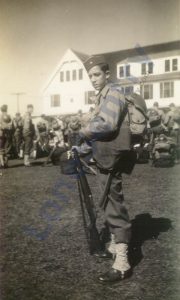 Early-War Uniform
A private photograph from 1942 showing details of the e...
Early-War Uniform
A private photograph from 1942 showing details of the e...
-
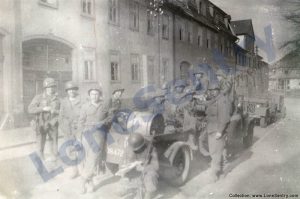 89th Infantry Division in Germany
Photographs of the U.S. Army's 89th Infantry ...
89th Infantry Division in Germany
Photographs of the U.S. Army's 89th Infantry ...
-
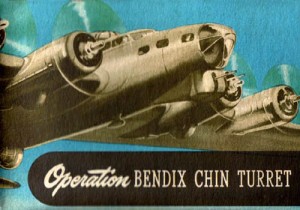 Bendix Chin Turret
Bendix manual on the Operation and Maintenance of the B...
Bendix Chin Turret
Bendix manual on the Operation and Maintenance of the B...
-
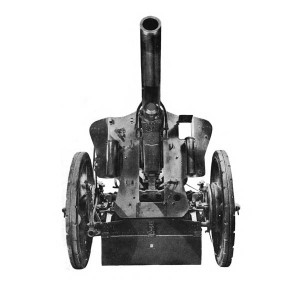 German 105-mm Howitzer
Three views of the German 105-mm howitzer (10.5 cm leFH...
German 105-mm Howitzer
Three views of the German 105-mm howitzer (10.5 cm leFH...
-
 How’s Your Sherman, Herman?
M4 Sherman Tank modification and upgrades from Army Mot...
How’s Your Sherman, Herman?
M4 Sherman Tank modification and upgrades from Army Mot...
-
Tag Archives: camouflage
Dummy Tanks in France
A report from the Intelligence Bulletin, December 1944 on the German use of dummy Panther tanks during World War II. The report includes two photographs of a dummy tank encountered in France in 1944. DUMMY TANKS Although German use of … Continue reading
Posted in armor, intelligence reports, publications, weapons
Tagged 1944, camouflage, dummy tanks, france, normandy
Comments Off on Dummy Tanks in France
New Figures from Corsar Rex
Corsar Rex has released new 1/35th-scale resin figures depicting WWII German troops in winter uniforms. The big set contains five figures — CR 35089: GERMAN SOLDIERS, Wehrmacht & Waffen SS, Big Sets — or each figure can be ordered individually — CR 35084: … Continue reading
Posted in scale models
Tagged camouflage, Corsar Rex, figures, snow, waffen ss, wehrmacht, winter
Comments Off on New Figures from Corsar Rex
Jagdpanzer IV Camouflage Stencils
J’s Work has released three airbrush camouflage scheme stencils for the Jagdpanzer IV: No. PPA5124: Airbrush CAMO-MASK for 1/35 German Jagdpanzer IV (70) Lang Camouflage Scheme 1 No. PPA5125: Airbrush CAMO-MASK for 1/35 German Jagdpanzer IV (70) Lang Camouflage Scheme 2 No. PPA5126: Airbrush CAMO-MASK for 1/35 … Continue reading
Posted in scale models
Tagged airbrush, ambush, camouflage, J's Work, jagdpanzer, markings, pattern, stencil
Comments Off on Jagdpanzer IV Camouflage Stencils
Bofors Guns Concealment in Dummy Tent
Source: Engineer-in-Chief’s Consolidated Intelligence Summary, Nos. 1-17, Headquarters, Australian Military Forces, May 1944.
Panzer IV Color Photo
Rare color photograph of a camouflaged Panzer IV knocked out in Normandy in 1944. From the markings and camouflage, the Panzer IV appears to be from the German Panzer Lehr Division. U.S. Air Force Photo.
Painting the M4 Tank
Instructions for painting the M4 Sherman tank from the Technical Manual TM 9-731B: Medium Tank M4A2, January 1943. Section XXV: PAINTING 145. PAINTING. a. Ordnance materiel is painted before issue to the using arms. One maintenance coat per year will … Continue reading
Posted in armor, miscellaneous, publications
Tagged armor, camouflage, m4, paint, research, sherman, tank, TM
Comments Off on Painting the M4 Tank
Retro-Camouflage
An E/A-6B Prowler and E/A-18G Growler of Electronic Attack Squadron VAQ 129 photographed at NAS North Island near San Diego. The aircraft are painted in three-tone camouflage paint schemes honoring U.S. Navy combat aircraft that fought in the Battle of the … Continue reading
U.S. Army Camouflage Uniform
The rather rare U.S. Army camouflage HBT (herringbone twill) uniform being worn by soldiers of the 406th Infantry Regiment, 102nd Infantry Division during training. [Source: LoneSentry.com Collection.]
Posted in photos, uniforms
Tagged 102nd infantry division, 406th infantry regiment, camouflage, HBT, photos, training, uniforms
1 Comment
Snow Camouflage for 90mm AAA Gun Battery
Diagram of snow camouflage for 90mm antiaircraft gun battery, from “Antiaircraft Artillery Notes,” No. 9, December 1944:
Disruptive Camouflage of Vehicles
How useful is disruptive camouflage on tanks and military vehicles? The following excerpt on camouflage is taken from the A Military Encyclopedia Based on Operations in the Italian Campaigns 1943-1945 by the G-3 Section, Headquarters 15th Army Group, Italy. The … Continue reading