-

-
Popular Posts
-
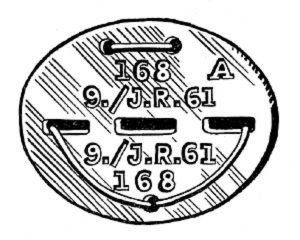 Erkennungsmarke (German Dog Tag)
From Handbook on German Army Identification, U.S. Milit...
Erkennungsmarke (German Dog Tag)
From Handbook on German Army Identification, U.S. Milit...
-
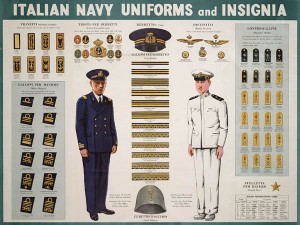 Italian Navy Uniforms and Insignia
:
CON...
Italian Navy Uniforms and Insignia
Italian Navy Uniforms and Insignia:
CON...
-
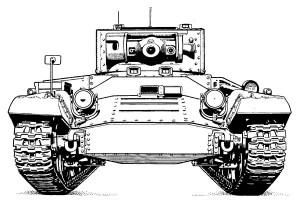 Valentine Tank Illustrations
Front and side views of the Valentine Tank (officially...
Valentine Tank Illustrations
Front and side views of the Valentine Tank (officially...
-
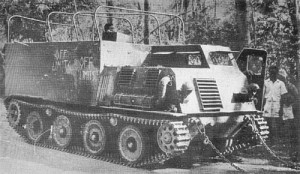 Japanese Type 1 Ho-Ki Armored Personnel Carrier
The Japanese produced a limited number of the innovativ...
Japanese Type 1 Ho-Ki Armored Personnel Carrier
The Japanese produced a limited number of the innovativ...
-
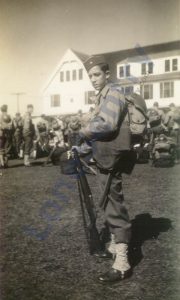 Early-War Uniform
A private photograph from 1942 showing details of the e...
Early-War Uniform
A private photograph from 1942 showing details of the e...
-
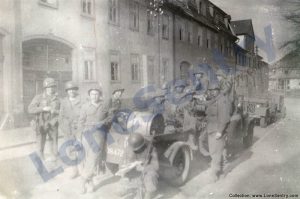 89th Infantry Division in Germany
Photographs of the U.S. Army's 89th Infantry ...
89th Infantry Division in Germany
Photographs of the U.S. Army's 89th Infantry ...
-
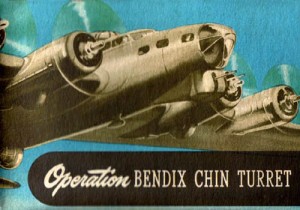 Bendix Chin Turret
Bendix manual on the Operation and Maintenance of the B...
Bendix Chin Turret
Bendix manual on the Operation and Maintenance of the B...
-
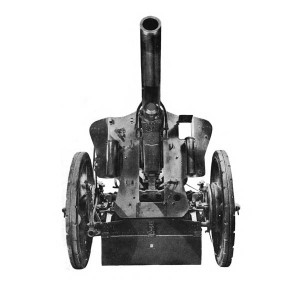 German 105-mm Howitzer
Three views of the German 105-mm howitzer (10.5 cm leFH...
German 105-mm Howitzer
Three views of the German 105-mm howitzer (10.5 cm leFH...
-
 How’s Your Sherman, Herman?
M4 Sherman Tank modification and upgrades from Army Mot...
How’s Your Sherman, Herman?
M4 Sherman Tank modification and upgrades from Army Mot...
-
Monthly Archives: June 2010
SdKfz 251/9
Photograph of a destroyed German SdKfz 251/9 halftrack in France in August 1944 showing the gun mount and vehicle interior. The SdKfz 251/9 mounted the short 7.5cm KwK37 (L/24) to provide a support weapon with antitank capability to panzergrenadier units. … Continue reading
New Dragon Ostfront Figures
Dragon Models has announced a new 1/35 WWII figure set depicting Soviet and German troops in winter uniforms from 1942-1943: Ostfront Winter Combatants 1942-43. Two German and two Russian figures are included.
Follow Thru: 60th Infantry Regiment
Below are a few photographs from Follow Thru, the unit history of the 60th Infantry Regiment which was published by the unit during occupation duty in Germany. The 60th Infantry “Go Devils” served as part of the 9th Infantry Division. … Continue reading
Posted in photos, publications
Tagged 60th infantry regiment, 9th infantry division, bazooka, jeep
8 Comments
66th Anniversary of D-Day
June 6th marks the 66th anniversary of D-Day, the Allied Invasion of Normandy in WWII. The Big Picture at boston.com remembers D-Day with a selection of high-resolution photographs from 1944 and 2010: Remembering D-Day, 66 Years Ago.
Posted in news, photos
Tagged anniversary, d-day, normandy
Comments Off on 66th Anniversary of D-Day
Armor Penetration Tables
The following tables show armor penetration characteristics for U.S. 37mm, 75mm, 76mm, and 90mm guns against homogeneous and face-hardened armor. The tables are taken from the July 1944 field manual FM 17-12 Tank Gunnery. From top to bottom, the ammunition … Continue reading
Posted in research, training, weapons
Tagged antitank, armor penetration, research, training
3 Comments
Rocket Run
Rocket Run was a booklet prepared by the Historical Section, Headquarters, North African Division, Air Transport Command, for passengers traveling on the Division’s “Main Line” from Casablanca to Karachi. Route Map:
Posted in publications
Tagged air transport command, booklet, middle east, north africa, publications, rocket run
1 Comment
Dummy Tanks
U.S. Army Signal Corps photograph from the site collection showing German dummy tanks in France which have been constructed on farm wagons: Original Caption: ETO HQ 44 25496 13TH NOV CREDIT… US ARMY SIGNAL CORPS PHOTOG… PFC. J.W. LAPINE… 166 … Continue reading
PzKpfw II Ausf L “Luchs”
The PzKpfw II Ausf L “Luchs” (Lynx) was a light reconnaissance tank developed on a modified Panzer II chassis. Approximately 100 PzKpfw II Ausf L were built from September 1943 to January 1944 and issued to the reconnaissance detachments of the German … Continue reading
U.S. Navy Ship Silhouettes
The WWII U.S. Navy manual FM 30-50: Recognition Pictorial Manual of Naval Vessels contained the following U.S. ship silhouettes showing the relative size of the various classes of aircraft carriers, battleships, cruisers, and destroyers. From top to bottom, ships shown … Continue reading
Posted in publications, research
Tagged manual, recognition, ships, silhouettes, u.s. navy
4 Comments
Panzer IV with Mesh Schürzen
A U.S. Air Force photograph shows a destroyed late-model Panzer IV with steel mesh (Drahtgeflecht) Schürzen on the hull and standard steel plate Schürzen around the turret. The original caption describes the Panzer IV as a victim of the Ninth … Continue reading