-

-
Popular Posts
-
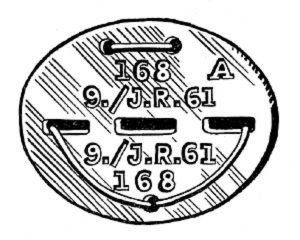 Erkennungsmarke (German Dog Tag)
From Handbook on German Army Identification, U.S. Milit...
Erkennungsmarke (German Dog Tag)
From Handbook on German Army Identification, U.S. Milit...
-
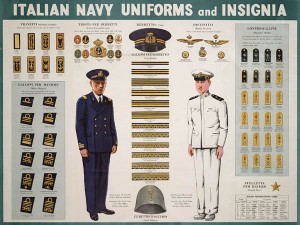 Italian Navy Uniforms and Insignia
:
CON...
Italian Navy Uniforms and Insignia
Italian Navy Uniforms and Insignia:
CON...
-
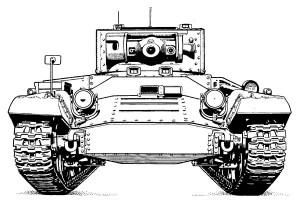 Valentine Tank Illustrations
Front and side views of the Valentine Tank (officially...
Valentine Tank Illustrations
Front and side views of the Valentine Tank (officially...
-
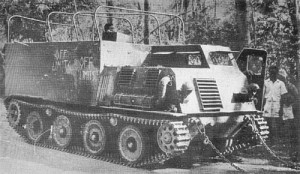 Japanese Type 1 Ho-Ki Armored Personnel Carrier
The Japanese produced a limited number of the innovativ...
Japanese Type 1 Ho-Ki Armored Personnel Carrier
The Japanese produced a limited number of the innovativ...
-
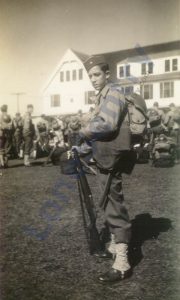 Early-War Uniform
A private photograph from 1942 showing details of the e...
Early-War Uniform
A private photograph from 1942 showing details of the e...
-
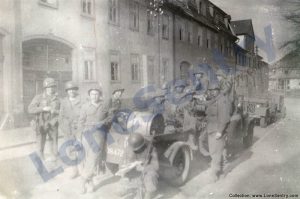 89th Infantry Division in Germany
Photographs of the U.S. Army's 89th Infantry ...
89th Infantry Division in Germany
Photographs of the U.S. Army's 89th Infantry ...
-
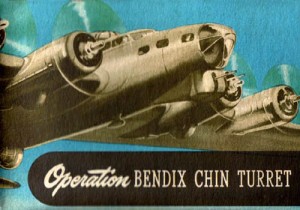 Bendix Chin Turret
Bendix manual on the Operation and Maintenance of the B...
Bendix Chin Turret
Bendix manual on the Operation and Maintenance of the B...
-
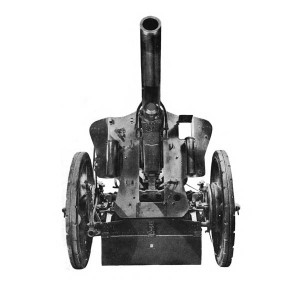 German 105-mm Howitzer
Three views of the German 105-mm howitzer (10.5 cm leFH...
German 105-mm Howitzer
Three views of the German 105-mm howitzer (10.5 cm leFH...
-
 How’s Your Sherman, Herman?
M4 Sherman Tank modification and upgrades from Army Mot...
How’s Your Sherman, Herman?
M4 Sherman Tank modification and upgrades from Army Mot...
-
Tag Archives: halftrack
M10 Tank Destroyers on Railcar
M10 tank destroyers, halftracks, and motorcycles are shown loaded on railcars in the United States. The boxcar in the background carries the emblem of the Chicago and North Western Line (CNW).
Posted in armor, photos, weapons
Tagged halftrack, M10, motorcycle, railcar, tank destroyer, TD, train
Comments Off on M10 Tank Destroyers on Railcar
Dragon Sd.Kfz. 251/17 Flak Halftrack
Dragon Models is releasing a new 1/35th-scale kit in their ’39-’45 Series depicting the Sd.Kfz. 251/17 Ausf. C armed with the 2cm Flak 38 — No. 6592: Sd.Kfz. 251/17 Ausf. C (2 in 1)
Posted in scale models
Tagged dragon, flak, halftrack, sdkfz 251, sdkfz 251/17
Comments Off on Dragon Sd.Kfz. 251/17 Flak Halftrack
ICM Maultier Halftrack Ambulance
ICM has announced a 1/35th-scale kit depicting a German Maultier halftrack ambulance from WWII: No. 35414 – V3000S/SS M Maultier with Shelter (WWII German Ambulance Truck).
Dragon Sd.Kfz. 10 with 5cm Pak 38
New WWII kit release from Dragon Models in the ’39-’45 Series — No. 6732: Sd.Kfz. 10 Ausf. A w/ 5cm Pak 38.
Learn to Recognize These Half-Tracks
Training Poster, U.S. Army Orientation Course.
Sd.Kfz.3a Maultier Half Track mit 3.7cm FlaK 37
November 2012 release from Cyber Hobby: 1/35th Sd.Kfz.3a Maultier Half Track mit 3.7cm FlaK 37.
Posted in scale models
Tagged 37mm, cyberhobby, flak, halftrack, maultier
Comments Off on Sd.Kfz.3a Maultier Half Track mit 3.7cm FlaK 37
Maco 1/72nd 15cm Panzerwerfer 42 auf sWS
Maco continues to add to their 1/72nd series of schwere Wehrmachtschlepper (sWS) kits with the new 15cm Panzerwerfer 42 auf sWS (1/72).
Posted in scale models
Tagged 1/72nd, halftrack, maco, scale models, sws, wehrmachtschlepper
Comments Off on Maco 1/72nd 15cm Panzerwerfer 42 auf sWS
Sd.Kfz. 10 Halftrack
Shown below are Bundesarchiv photographs of the German Sd.Kfz. 10 halftrack. (Sd.Kfz. = Sonderkraftfahrzeug or special-purpose motorized vehicle.) The Sd.Kfz. 10 was used extensively by the German military throughout WWII as a light tractor and prime mover with over 14,000 … Continue reading
M2 Accessories from Black Dog
New 1/35 resin accessories kit from Black Dog for the U.S. M2 halftrack. The kit includes heavy storage and tarpaulins for front, sides, and rear of the vehicle along with winter tires with chains.
Posted in scale models
Tagged 1/35th, accessories, black dog, halftrack, M2, model, resin, storage
1 Comment
Digging in AA Half-Tracks
Instructions for digging defensive positions for AA halftracks from “Antiaircraft Artillery Notes,” HQ ETO, No. 8, December 1944: Digging in Half-Tracks Source: AA Section, Headquarters Twelfth Army Group The principle of digging in equipment is one which all AAA combat units understand … Continue reading