-

-
Popular Posts
-
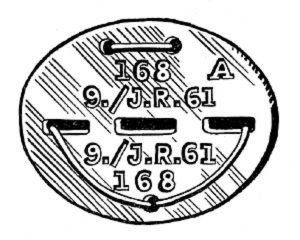 Erkennungsmarke (German Dog Tag)
From Handbook on German Army Identification, U.S. Milit...
Erkennungsmarke (German Dog Tag)
From Handbook on German Army Identification, U.S. Milit...
-
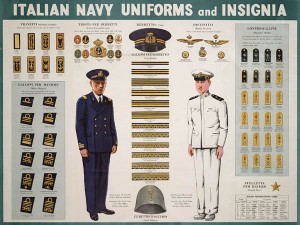 Italian Navy Uniforms and Insignia
:
CON...
Italian Navy Uniforms and Insignia
Italian Navy Uniforms and Insignia:
CON...
-
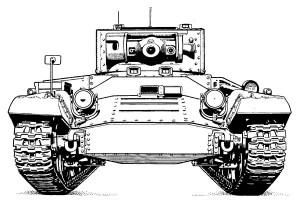 Valentine Tank Illustrations
Front and side views of the Valentine Tank (officially...
Valentine Tank Illustrations
Front and side views of the Valentine Tank (officially...
-
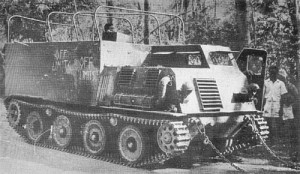 Japanese Type 1 Ho-Ki Armored Personnel Carrier
The Japanese produced a limited number of the innovativ...
Japanese Type 1 Ho-Ki Armored Personnel Carrier
The Japanese produced a limited number of the innovativ...
-
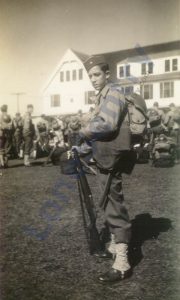 Early-War Uniform
A private photograph from 1942 showing details of the e...
Early-War Uniform
A private photograph from 1942 showing details of the e...
-
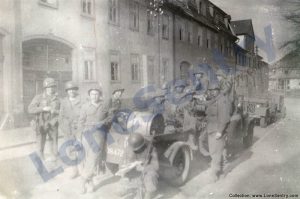 89th Infantry Division in Germany
Photographs of the U.S. Army's 89th Infantry ...
89th Infantry Division in Germany
Photographs of the U.S. Army's 89th Infantry ...
-
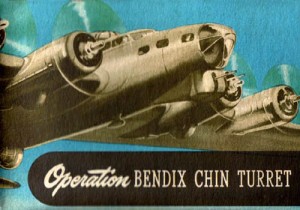 Bendix Chin Turret
Bendix manual on the Operation and Maintenance of the B...
Bendix Chin Turret
Bendix manual on the Operation and Maintenance of the B...
-
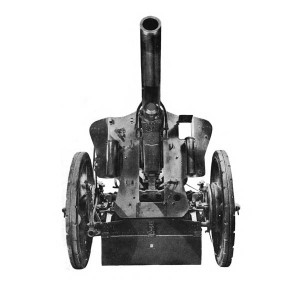 German 105-mm Howitzer
Three views of the German 105-mm howitzer (10.5 cm leFH...
German 105-mm Howitzer
Three views of the German 105-mm howitzer (10.5 cm leFH...
-
 How’s Your Sherman, Herman?
M4 Sherman Tank modification and upgrades from Army Mot...
How’s Your Sherman, Herman?
M4 Sherman Tank modification and upgrades from Army Mot...
-
Tag Archives: photos
Bulldozer Removes Dummy German Plane
A bulldozer from the 9th Air Force engineers clears a German dummy plane from a captured airfield on the Cherbourg peninsula of France. (U.S. Air Force Photo.)
P-47 Mascot
Unit mascot sits proudly in the nose of a P-47 Thunderbolt fighter. (U.S. Air Force WW2 Photo)
BB in Port
BB in Port, All Hands Magazine, August 1944. (U.S. Navy Photo.)
Panzer IV Color Photo
Rare color photograph of a camouflaged Panzer IV knocked out in Normandy in 1944. From the markings and camouflage, the Panzer IV appears to be from the German Panzer Lehr Division. U.S. Air Force Photo.
Panzerwrecks 13 (Italy, Vol. 2)
Panzerwrecks 13: Italy 2, the latest volume in the well known Panzerwrecks photo-book series, has been released by authors Lee Archer and William Auerbach. Photograph features include: Weapons Dump – Italian Style; Nashorn 214; Elefants of 1./s.Pz.Jg.Abt.653; and Dug-in Panther … Continue reading
Posted in armor, publications
Tagged armor, book, italy, panzerwrecks, photos, publications
Comments Off on Panzerwrecks 13 (Italy, Vol. 2)
Frozen Sauerkraut
A strange WWII sauerkraut photograph from U.S. Military Intelligence publication German Mountain Troops, December 1944. Original caption: “Mountain troops in a Finnish forest have unloaded from a standard container a cylindrical chunk of frozen sauerkraut which they are cutting up. In … Continue reading
Posted in miscellaneous, photos
Tagged bizarre, food, frozen, photos, sauerkraut, saw, strange, WTF
Comments Off on Frozen Sauerkraut