
The Famous Fourth

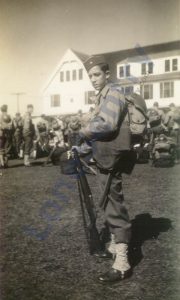
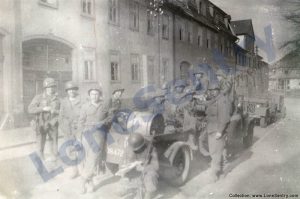
The Famous Fourth, The Big Picture, Army Pictorial Center, U.S. Army — The history of the 4th Infantry Division.


Wehrmacht Infantry Gruppe

The German Infantry Gruppe from Newsmap published by the U.S. War Department.

Wehrmacht WW2 Infantry Gruppe

WW2 German Infantry Squad

WW2 Wehrmacht Platoon Weapons


Antimechanized Defense

FM 17-40 Armored Infantry CompanyAntimechanized defense for armored infantry from the U.S. field manual FM 17-40: Armored Infantry Company:


Antimechanized defense is both passive and active.

(1) The troops are protected passively against mechanized attacks by the digging of fox holes and emplacements, the erection of barricades, tank traps, and mine fields, and by taking advantage of all natural obstacles in the area. (See figs. 1 and 2.)

Passive Antitank Measures: Fox holes, barricades, and natural terrain

Passive Antitank Measures: Tank traps and mine fields

(2) Active measures (fig. 3) include the placing of all antitank weapons in the best possible places to protect the personnel from hostile mechanized attack. Antitank guns and rocket launchers are used to destroy attacking tanks. Riflemen fire on tanks (directly at the vision slits) to aid in blinding the mechanized forces and make them keep hatches closed, thus preventing crews from throwing hand grenades in emplacements or fox holes. Individuals take cover in fox holes or emplacements in time to prevent being crushed. They come out of cover immediately after the tanks pass over in order to repel the accompanying hostile infantry.

Active Antitank Measures


Tank Riders

FM 17-40 Armored Infantry Company Due to plentiful motorized transport, U.S. infantry rarely rode on tanks during WWII. However, U.S. infantrymen were trained on how to board and ride tanks when necessary. The field manual FM 17-40: Armored Infantry Company contained instructions for transporting armored infantry by tanks.
 

ARMORED INFANTRY TRANSPORTED ON TANKS

1. PURPOSE AND SCOPE. This appendix is a guide for unit commanders in planning the training of armored infantry rifle companies in riding on tanks and tank units in transporting the armored infantry rifle companies.

2. SITUATIONS ADAPTABLE TO MOUNTING ARMORED INFANTRY ON TANKS. Three situations in which it may be desirable to transport infantry on tanks are—

a. When it is desired to avoid traffic congestion by withholding the organic vehicles of the infantry temporarily. These vehicles will follow as soon as the traffic conditions of the roads permit.

b. When the terrain is unsuitable for the organic vehicles of the armored infantry.

c. When close mutual support is desired and maximum coordination must be achieved.

3. CONSIDERATIONS AFFECTING TRANSPORTATION OF ARMORED INFANTRY ON TANKS. a. The employment of tanks for transporting armored infantry must not interfere with the primary mission of the tanks. The decision for this employment is made by the commander of the combined infantry-tank force.

b. Tactical unity of both tank and infantry organizations must be preserved to the maximum extent in all echelons of command, from the battalion down to the squad or crew.

c. Coordination and planning must be thorough and include designation of specific tanks for infantry elements, provision for guiding the infantry to the tank positions, and provision for communication both between infantry and tank commanders and within the infantry chain of command.

d. The armored infantry and tank units should have had prior training together. The infantry squad members are trained in securing themselves on the tank to safely travel over rough ground, in riding over extended periods with the minimum possible physical discomfort, and in using the protection afforded by the turret. Care must be taken by the infantry not to block the ventilator on the rear of the tank.

e. The tank commander is trained to coordinate with the infantry squad leader. The tank driver most drive carefully over rough terrain and through wooded areas to insure the safety of infantrymen on the tank deck.

f. Infantry riding on tanks will maintain continuous all-around observation for hostile air or ground action. A sector of responsibility is assigned each infantryman according to his position on the tank. One man will be designated as the air sentinel. When passing through wooded or jungle areas the air sentinel will also observe for snipers in trees, particularly to the front.

4. TRANSPORTATION OF INFANTRY NOT IN IMMEDIATE PRESENCE OF ENEMY. a. Armored infantry not in the immediate presence of the enemy may be mounted in larger groups on the tank than when tactical employment is contemplated. Distribution should be flexible in order that adjustments can be made due to vehicles being forced out of action. Tactical unity is preserved in the rifle and tank companies whenever possible.

b. Responsibility The infantry commander is responsible for the movement of infantry personnel to the tanks and the mounting thereon. The tank unit commander provides guides to conduct infantry personnel to the particular tanks which they will mount. The actual march is under the control of the tank unit commander with respect to routes, rate of march, and halts. Provision is made for rest periods, and to allow the infantry to dismount whenever fire is received from artillery or aircraft.

c. Coordination. Upon receipt of orders to transport infantry on tanks, the tank unit commander establishes liaison with the infantry unit to coordinate the planning of the movement. The liaison officer will furnish accurate information to the infantry on the number of tanks available, tank communication facilities available to the infantry, number of guides to be furnished by tank unit, and other necessary information.

d. Planning should provide for the infantry company and platoon commanders to be mounted on vehicles of corresponding tank unit commanders, thereby allowing direct communication between them and utilizing the tank unit radio net for the transmission of messages within the infantry chain of command. Where possible, the infantry company commander’s 1/4-ton truck with SCR-510 should follow the tank company commander. It will then be immediately available to the infantry commander when the company dismounts. Additional communication may be planned for the use of prearranged visual signals for mounting, dismounting, and dispersing of the infantry.

5. TACTICAL CONSIDERATIONS. a. Six men is the maximum that can conveniently ride for any distance on the rear of a medium tank. For this reason, six has been taken as the basic number for the drills prescribed herein. The tank turret will furnish partial protection for this number from frontal fire.

b. Tactical unity must be preserved to the greatest possible degree.

6. DISTRIBUTION OF INFANTRY TO TANKS. a. Assignment for mounting of an armored infantry rifle platoon on the tanks of a medium tank company is shown in figure 40.

Armored Infantry Rifle Platoon Mounted on Tanks of Medium Tank Company

Figure 40. Armored rifle platoon mounted on tanks of medium tank company.

b. Assignment for mounting of two armored infantry rifle platoons on a company of medium tanks is shown in figure 41. (Note. The charts show organization, not formation.)

Two Armored Infantry Rifle Platoons Mounted on Tanks of Medium Tank Company

Figure 41. Two armored rifle platoons mounted on tanks of medium tank company.

7. COORDINATION. All of the elements discussed under coordination in paragraph 4c will apply.

8. SIGNAL COMMUNICATION. Careful pre-planning must provide for communication between the tanks and infantry both when the infantry are mounted and dismounted. Tank unit radio channels should be chosen for inter-netting with the infantry and an appropriate SOI set up for the operation. External telephones installed on the rear of tanks and connected with the tank interphone system will provide communication between dismounted infantry and tank crews.

9. INSTALLATION OF HANDHOLDS. a. Rope. The installation of a rope handhold attached to the lifting hooks on the turret is a satisfactory means for the
infantrymen to hold on and maintain their position while riding on the tank. Figure 42 shows arrangement of ropes on a medium tank.

Arrangement of ropes on medium tank M4A1.

Figure 42. Arrangement of ropes on medium tank, M4A1.

Infantry mounted on medium tank M4A1.

Figure 43. Six infantrymen mounted on medium tank, M4A1 (left view).

Infantrymen mounted on medium tank, M4A1.

Figure 44. Six infantrymen mounted on medium tank, M4A1 (rear view).

Note. An armored infantry rifle company less the antitank platoon, administrative, mess, supply and maintenance sections,
and personnel with vehicles, may be mounted on two medium tank companies as follows:

b. One rifle platoon is mounted as shown in figure 40 except as noted in c below.

c. Two rifle platoons are mounted as shown in figure 41 except as noted in c below.

d. The armored infantry company command section may be mounted on the tank company commander’s tank of either tank company. If mounted with the tank company carrying one rifle platoon of armored infantry, the following units are displaced:

(1) 1/2 PLAT HQ & RIFLE SQD (one officer and 5 enlisted men) from the CO’s tank to the No. 1 tank of the 3d tank platoon.

(2) 1/2 PLAT HQ & RIFLE SQD (6 enlisted men including 1 rifleman from mortar sqd) from No. 1 tank of the 3d tank platoon to the No. 2 tank of the same platoon.

e. If mounted with the tank company carrying two rifle platoons of armored infantry the following units are displaced:

(1) 1/2 PLAT HQ & RIFLE SQD (one officer and 5 enlisted men) from the CO’s tank to the No. 1 tank of the 3d tank platoon.

(2) 1/2 PLAT HQ & RIFLE SQD (6 enlisted men including 1 rifleman form mortar sqd) from No. 5 tank of the 3d tank platoon to the howitzer tank of the other tank company.

Platoon HQ, Rifle Squad Mounted on Tanks

Figure 45. Drill for the mounting of armored infantry on tanks.

Light Machine Gun Squad Mounted on Tanks

Figure 46. Drill for the mounting of armored infantry on tanks.

Mortar Squad Mounted on Tanks

Figure 47. Drill for the mounting of armored infantry on tanks.

Rifle Squad Mounted on Tanks

Figure 48. Drill for the mounting of armored infantry on tanks.

Company Headquarters Section Mounted on Tanks

Figure 49. Drill for the mounting of armored infantry on tanks.


From Bayonet to Heavy Artillery

This illustration from Tactical and Technical Trends shows the primary weapons of the WWII German infantry division according to range — from the lowly bayonet (15½ in.) to the divisional artillery (20,000 yds.)
Weapons of the German Infantry Division

Weapons of the German Infantry Division (click to enlarge)

WEAPONS OF THE GERMAN INFANTRY DIVISION
Based on a sketch prepared by the Military Intelligence Training Center, Camp Ritchie, Maryland

LEGEND:

1: SEITENGEWEHR (BAYONET)

  • Length – 15 1/2
  • Carried by all riflemen

2: HANDGRANATE (HAND GRENADE)

  • Delay Fuse – 4 1/2 sec
  • Danger Radius – 20 yds
  • Variable number per rifleman

3: PISTOLE (PISTOL)

  • Cal – .35
  • Semi-Automatic
  • Carried by personnel who do not carry rifle or submachine gun

4: MASCHINENPISTOLE (SUB MACHINE GUN)

  • Cal – .35 – Automatic
  • Eff Range – to 200 yds
  • Used by small unit leaders and company commander

5: GEWEHR 98K (RIFLE)

  • Cal – .31
  • Eff Range – 400 yds
  • Six per squad

6: LEICHTES MASCHINENGEWEHR 34 (LIGHT MACHINE GUN)

  • Cal – .31
  • Eff Range – 800 yds
  • Rate of Fire – 100/150 rpm
  • One per squad
  • (Model 42 now being manufactured)

7: LEICHTER GRANATWERFER (50-mm MORTAR)

  • Eff Range – 350 yds
  • Rate of Fire – 6 rds in 9 sec
  • Danger Radius – 25 yds
  • One per platoon

8: PANZERBUCHSE 39 (AT RIFLE)

  • Cal – .31
  • Eff Range – 200 yds
  • Rate of Fire – 6/8 rpm
  • Three per rifle company

9: SCHWERES MASCHINENGEWEHR 34 (HEAVY MACHINE GUN)

  • Cal – .31
  • Eff Range – 1,500 yds
  • Rate of Fire – 350 rpm
  • Twelve per MG Co
  • (Same as LMG except for mount)

10: SCHWERER GRANATWERFER (81-mm MORTAR)

  • Eff Range – 1,200 yds
  • Rate of Fire – 20/25 rpm
  • Danger Radius 35 yds
  • Six per MG Company

11: 3.7 cm PAK (37-mm AT GUN)

  • Eff Range – 800 yds
  • Rate of Fire – 15 rpm
  • Twelve per AT Co in Infantry Regiment

12: 5 cm PAK (50-mm AT GUN)

  • Eff Range – 1,000 yds
  • Rate of Fire – 16 rpm
  • Eighteen per AT
  • Battalion in Infantry Division

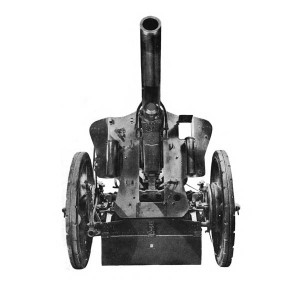
13: 7.5 cm LEICHTES INF GESCHUTZ (75-mm INF HOWITZER)

  • Max Range – 3,900 yds
  • Rate of Fire – 10/20 rpm
  • Six per Howitzer Company in Infantry Regiment

14: 15 cm SCHWERES INF GESCHUTZ (150-mm INF HOWITZER)

  • Max Range – 6,000 yds
  • Rate of Fire – 5 rpm
  • Two per Howitzer Company in Infantry Regiment

15: 10.5 cm LEICHTE FELDHAUBITZE (105-mm GUN HOWITZER)

  • Max Range – 12,000 yds
  • Twelve per light battalion in Division Artillery

16: 15 cm SCHWERE FELDHAUBITZE (150-mm HOWITZER)

  • Max Range – 10,500 yds
  • Eight per medium battalion in Division Artillery

17: 10 cm KANONE (105-mm GUN)

  • Max Range – 20,000 yds
  • Four per medium battalion in Division Artillery