-

-
Popular Posts
-
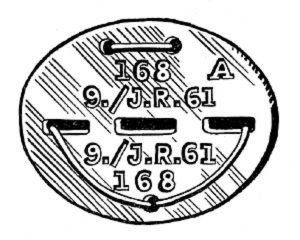 Erkennungsmarke (German Dog Tag)
From Handbook on German Army Identification, U.S. Milit...
Erkennungsmarke (German Dog Tag)
From Handbook on German Army Identification, U.S. Milit...
-
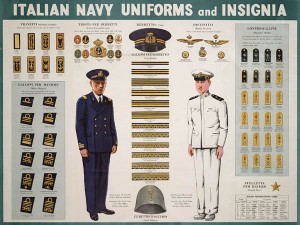 Italian Navy Uniforms and Insignia
:
CON...
Italian Navy Uniforms and Insignia
Italian Navy Uniforms and Insignia:
CON...
-
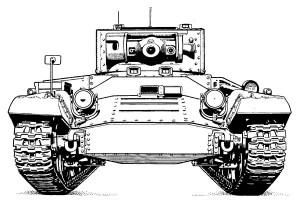 Valentine Tank Illustrations
Front and side views of the Valentine Tank (officially...
Valentine Tank Illustrations
Front and side views of the Valentine Tank (officially...
-
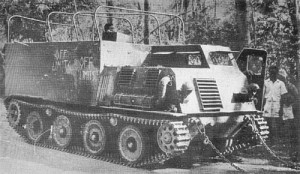 Japanese Type 1 Ho-Ki Armored Personnel Carrier
The Japanese produced a limited number of the innovativ...
Japanese Type 1 Ho-Ki Armored Personnel Carrier
The Japanese produced a limited number of the innovativ...
-
 Early-War Uniform
A private photograph from 1942 showing details of the e...
Early-War Uniform
A private photograph from 1942 showing details of the e...
-
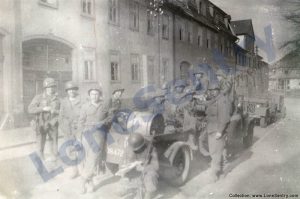 89th Infantry Division in Germany
Photographs of the U.S. Army's 89th Infantry ...
89th Infantry Division in Germany
Photographs of the U.S. Army's 89th Infantry ...
-
 Bendix Chin Turret
Bendix manual on the Operation and Maintenance of the B...
Bendix Chin Turret
Bendix manual on the Operation and Maintenance of the B...
-
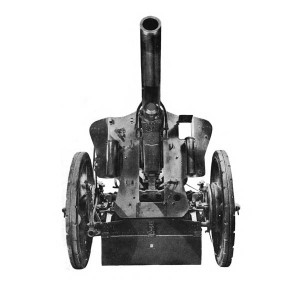 German 105-mm Howitzer
Three views of the German 105-mm howitzer (10.5 cm leFH...
German 105-mm Howitzer
Three views of the German 105-mm howitzer (10.5 cm leFH...
-
 How’s Your Sherman, Herman?
M4 Sherman Tank modification and upgrades from Army Mot...
How’s Your Sherman, Herman?
M4 Sherman Tank modification and upgrades from Army Mot...
-
Tag Archives: ammunition
M10 Tank Destroyer Ammunition
Illustration of the shell labels and markings for the ammunition of the M10 tank destroyer 3-inch main gun. Source: TM 9-731G: 3-Inch Gun Motor Carriage M10A1, War Department Technical Manual, July 1943.
Posted in armor, weapons
Tagged 3-inch, 76mm, ammunition, M10, projectile, shell, tank destroyer, TD
Comments Off on M10 Tank Destroyer Ammunition
Verlinden Nebelwerfer Crew, Ammo & Gear
New Verlinden Productions release in 1/35th-scale for the German WWII Nebelwerfer: #2766 Nebelwerfer Base-Ammo-Crew-Gear, 1:35th Scale. The complete diorama kit (without the gun) is priced at $49.95 online.
Posted in scale models
Tagged ammunition, base, crew, gear, nebelwerfer, verlinden
Comments Off on Verlinden Nebelwerfer Crew, Ammo & Gear
M4 Sherman Tank Ammunition Storage
Diagram of M4A2 Sherman tank ammunition storage from TM 9-731B: Medium Tank M4A2, War Department Technical Manual, Washington, January 13, 1943. ARMAMENT AMMUNITION STOWAGE POSITION 97 rounds 75 mm 50% HE 40% AP 10% WP (smoke) 15 rounds–Left sponson … Continue reading
37-mm Ammunition Comparison
Comparison of 37-mm Ammunition from WW2 technical manual: TM 9-1901: Artillery Ammunition, War Department Technical Manual, June 1944: FIXED AND SEMIFIXED ROUNDS AND SEPARATE-LOADING PROJECTILES: A – MK.II A1, PRACTICE ROUND FOR 37-MM GUN SUBCALIBER, M1916 B – M56 H.E ROUND FOR 37-MM GUNS, … Continue reading
Posted in miscellaneous, research, weapons
Tagged 37mm, ammunition, antitank, projectile, rounds
Comments Off on 37-mm Ammunition Comparison
60mm Mortar Practice Shell
Illustration of 60-mm mortar practice shell from the U.S. WW2 technical manual: TM 9-1901: Artillery Ammunition, War Department Technical Manual, June 1944: 81. SHELL, PRACTICE, M50A2, W /FUZE, P.D., M52, 60-MM MORTARS, M1 and M2, COMPLETE ROUND (fig. 59), … Continue reading
Destruction of Artillery Ammunition
Instructions for destruction of artillery ammunition to prevent capture by the enemy — the methods will require imagination, initiative, and ingenuity. Source: TM 9-1901: Artillery Ammunition, U.S. War Department Technical Manual, June 1944. DESTRUCTION OF AMMUNITION UPON IMMINENCE OF CAPTURE … Continue reading
M10 Ammunition Stowage Diagram
Diagram of ammunition stowage in the M10 tank destroyer, from TM 9-731G: 3-Inch Gun Motor Carriage M10A1, War Department Technical Manual, July 1943.
Posted in armor, weapons
Tagged 3-inch, ammunition, diagram, M10, stowage, tank destroyer, TD
Comments Off on M10 Ammunition Stowage Diagram
M8 HMC Ammunition Storage
Diagram of 75-mm and .50 caliber ammunition storage in the 75-mm Howitzer Motor Carriage M8 from TM 9-732B: 75-mm Howitzer Motor Carriage M8, War Department Technical Manual, January 1944.
Releasing 76mm Shells for Active Duty
A simple trick for improving the 76mm ready racks in the M4 Sherman from Army Motors, February 1945: Releasing 76mm Shells for Active Duty UPSIDE-DOWNING YOUR TANK’S READY RACK AND SNAPPING OFF THOSE CLIPS IS WHAT DOES IT If the … Continue reading
Posted in armor, training
Tagged 76mm, ammunition, armor, army motors, ordnance, ready racks, tank
1 Comment
NY Divers Discover Lost WWII-era Shells from USS Bennington
Divers in New York have found over 1,500 live naval ammunition shells in the waters under the Verrazano Bridge in New York. The WWII-era copper shells are believed to have fallen overboard during an accident offloading ammunition from the aircraft … Continue reading