
Air Attack at Hunt’s Gap

The following correspondent’s report from the UP (United Press) describes the fighting at Hunt’s Gap in Tunisia in February-March 1943. Compare this account of the battle to the German commander Oberst. Rudolf Lang’s account and British observer Howard Marshall’s account.

BRITISH BOMBER SCORES AGAINST 6 GERMAN TANKS
Northern Tunisia Fighters Receiving Allied Air Support

BY EDWARD W. BEATTIE

ON THE NORTHERN TUNISIAN FRONT, March 1.—(UP)—There were six enemy tanks—big boys, probably Mark VI’s—massed north of the Mateur-Beja road when a bomber went in and dropped two bombs squarely into the middle of them.

British soldiers threw their helmets into the air and cheered. And well they might, for troops in this area never before had such air support as they are now receiving.

The British bombers caught Rommel’s supply columns in a narrow valley above. Beja Sunday. There was a thick fog lying across the valley and it was not an ideal day for bombing.

But, starting at dawn, the Allied bombers made eight sorties low into the valley and when they got through, the hair-pin road along which the Axis transport was concentrated was pock-marked with bomb craters.

Enemy Immobilized

I talked to the returning pilots and they said most of the enemy vehicles were stationary and some of them immobilized by the fury of the Allied attack.

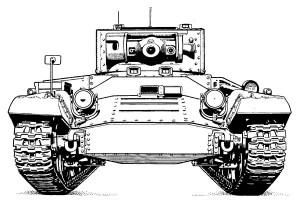
The Germans threw an attack against Allied lines above Beja Sunday, using about 10 Mark IV tanks. British Churchill tanks rolled out to oppose them and knocked out three and perhaps four of the Mark IV’s. A heavier enemy attack may come, however, because a force of about 30 German tanks was seen just off the Beja road.

Allied air power was thrown against the Germans as early as Saturday, and ground troops then reoccupied two important positions.

The British early Saturday morning took Fort McGregor—named after a young American lieutenant from Brooklyn—south of Medjez-El-Bab. The American garrison of Fort McGregor was withdrawn some time ago.

British Surprise

The Germans took it Friday. Crack German tank forces and other elements penetrated through a dry river bed to the south. The British surprised them with a counterattack, killed 40 and captured 60.

The British reoccupied Tally-Ho corner after the Germans withdrew into the hills east of the Medjez-El-Bab – El-Aroussa road during the night. When darkness came Saturday, the British were mopping up a few remnants halfway along the road.

The attack toward Beja made little progress Saturday, and was heavily bombed and shelled. The Germans sent forces of roughly a battalion (1,000 men) through the hills between the Beja-Mateur and Beja-Medjez-El-Bab road, intending to cut around the latter around over Zarga. By Saturday night, the battalion had not been in contact with the British, although artillery had shelled the Germans heavily.

Germans Use Planes

The Germans have been using their planes liberally to attack Allied positions and shoot up transport behind the front. They attacked Tally-Ho corner three times without much result.

Roughly, it was estimated the Germans threw 13 battalions (13,000 men), with supporting troops of two divisions (perhaps 30,000 men) into the action on the northern front, but paradoxically, fighting was more restricted Saturday than the day before.

Of an estimated 50 German and Italian tanks involved, It was estimated that at least 15 to 20 have been knocked out.


Battles of Kampfgruppe Lang in Tunisia - Attack on Beja

The Historical Division of the U.S. Army in Europe assembled a series of Foreign Military Studies from 1945 to 1954 covering the fighting in Europe during World War II. The volume Battles of Kampfgruppe Lang in Tunisia (10th Panzer Division) by Oberst. Rudolf Lang covered the fighting around Sidi Nsir, Hunt’s Gap, and Beja from the German perspective. (Note: According to the cover page, the manuscript was written from memory without written sources.)

The Attack on Beja

New mission (Beja).

The following day I had to go to a place near Chouigui (35 kilometers westnorthwest of Tunis) to take over the command of the group making the main effort during the attack on Beja. I was assigned to the Korpsgruppe of General Weber and had only the day of the 25th at my disposal to make all the preparations for the attack on Beja. Most of the troop elements forming my Kampfgruppe — pulled out of other sectors — could not arrive before the evening or during the night (25/26). And the Kdr. who had driven to my command post in advance in order to be briefed and to receive their orders, were in the same situation as myself, that is to say, they had no opportunity to look over the terrain: a rather considerable disadvantage!

The troops.

Troops assigned to me were:

- the I./Pz.Gren.Rgt. 86 mot. of the 10.Pz.Div. (Kdr. Hauptm. Haut)

- the Tiger-Abt. 501 (Kdr. Major Lueders) consisting of about 20 Tigers.

- one Pz.Gruppe of the Pz.Rgt. 7 of the 10.Pz.Div. incl. Pz.Pioniere (Fhr. Hauptmann Burgk)

- mot. reconnaissance forces (Pz.Spaehwagen) of the 10.Pz.Div.?

- few pieces of artillery

- sufficient Flak (of the Flakdivision Tunis, 20.Fla.Div.?)

- subsequently also the I.R. 47 (Kdr. Oberstlt. Busse) reinforced by Art. Abt. 27.

Prevailing situation unfavorable.

Right from the beginning this kind of composition was unfavorable in that mountain territory, because the Panzer and the automobiles were forced to keep on the road and had no opportunity whatsoever to “spread out”, and also, because no mountain troops were included. In a terrain of this kind it is impossible for the concentrated firing power of a mot. column extending over many kilometers to unfold and become fully effective. Due to this topography it was, therefore, to be anticipated that during this operation, with the target Beja and the British Headquarters there, up to east of Beja, only the advance Panzer elements would be engaged in any fighting action. Other unfavorable factors were:

- some of the troops brought in from far away had not yet arrived when the 26 Febr. attack started at 0500 hours on 26 February (f.i. the entire I.R. 47);

- the elements previously engaged in the fighting east of Tebessa and those who had participated in the interrupted thrust on Maktar were tired;

- the lower-echelon commanders had had no opportunity to reconnoiter (see above);

- and, in the final analysis, the attack had been ordered over hastily, Pz.A.O.K. 5 had not granted a repeatedly requested postponement by even one day because of Ob.Sued’s insistence.

The fighting near Sidi Nsir.

According to orders, the Panzer point under Major Lueders crossed the most advanced security lines at 0500 hours. Contact with the enemy was made along the mountain ridges east of Sidi Nsir. A swampy spot in the road along the rocky slopes had been infested with most carefully camouflaged mines so that the first Panzer going through had been immobilized and was blocking up the road. Moreover, a rather heavy artillery and mortar fire started, excellently directed from many favorable observation posts in the mountains. Pz. Pioniere sent forward were unable to clear the mine field or to get the immobilized leading Panzer going again, because sheafs of fire coming from M.G. coming mainly from the flanks mowed down every single man. Nevertheless I personally went from Panzer to Panzer, sprinting from one cover to the next, up to the point and past it through the mine field to a spot where the road wound around a projection in the mountain. From that spot I was able to observe many enemy guns along the declining slope and in the bottom of the valley, firing at us. There was no doubt about the situation: for the time being it was impossible to proceed any farther beyond this point. And even if an attempt should be made to push the thrust farther ahead, a great number of Panzer would be knocked out along the winding road into the valley by the numerous enemy artillery pieces, antitank and dual purpose antitank antiaircraft guns. Therefore I gave the order for the I./86 to detruck and proceed on foot making a detour to the south around the mountain range running from northeast (609) toward southwest, to break through to the road Sidi Nsir – Ksar Mezouar, and, taking protective cover to the southwest, to roll up the enemy front in direction toward Sidi Nsir. I was well aware of the fact that this movement would cost precious hours.

Enemy air force activity.

In the meantime the enemy air force had also become more active, since it could not very well miss noticing the huge army column winding its way into the depth without being engaged in any action, and, at the same time, outright inviting an attack. However, hardly any of the enemy planes came very close being held off at a respectful distance by the massed fire from numerous 8.8 centimeter and 2 centimeter guns. The same situation prevailed during the following days: whenever an especially daring flyer, disregarding or underestimating the defensive power of his opponent came too close to the effective range of the latter’s weapons, he was almost always hit by the well aimed fire of the German Flak. A considerable number of planes were shot down during the days.

General Weber, who had joined his troops on the field of action, was given a detailed report. He approved of the measures taken.

Rolling up the front.

Following the orders issued to him, by about evening, Hauptmann Haut (I./86) had not only fought his way through to the Sidi Nsir – Ksar Mezouar Road and thereby interrupted communications to and from Beja, but he also had wheeled toward north with the mass of his troops and was now rolling up the front of the British forces. Some of these were making a stand in Arab huts. During dusk and while rain began to fall, the enemy forces were wiped out and the area mopped up in severe close combat action, the I./86 went through all this in excellent manner.

Success.

Very soon this attack showed results: the fire on the Panzer point slowed up, finally died down completely; right away the engineers cleared the mine field, the immobilized and blocking Panzer was pushed aside, the Panzers drove around the projection in the mountain, down along the winding road, and destroyed the enemy artillery. Several hundred prisoners were taken, at one spot, in a small area, about 25 artillery pieces, antitank guns, and self-propelled mounts were captured.

By then it was absolutely dark and a torrential rain was falling, as is typical in the tropics; therefore the plan immediately to continue the attack had to be given up. The heavy, huge Panzer has great difficulties trying to cross a swampy stretch in the road, bogged down in the mire, so that soon, when the water started rushing down too, it was impossible to get through. Some elements of the Kampfgruppe were assigned to road repair work, again precious hours had to be wasted.

The attack is continued.

Not waiting for additional forces to come up, at 0300 hours on 27 February the attack was continued with Pz.Spaehwagen at the point. Very soon the thrust was stopped by a mine obstacle which had obviously been installed hurriedly. As soon as these mines had been cleared, we started up again, during broad daylight, along the narrow valley flanked by high mountains (717 usw. [?]). The vehicles at the point were approaching the Station of Ksar Mezouar. There the humid valley broadened out; moreover, at this point, the valley is dominated in front by an odd-shaped mountain crest offering ideal opportunities for observation. Once more a broad and deep mine field forced us to stop, then a terrific fire burst out, which convinced us very quickly of the facts that the enemy’s artillery was by far superior, with efficient fire control, and that the enemy had ammunition at his disposal in such amounts as to make one envious. On the other hand, the enemy airplanes had hardly a chance to become active. Once more — as happened on the previous day east of Sidi Nsir — clearing of the mines was impossible because of the fire, and by-passing the obstacle was not possible because of the conditions of the terrain. Consequently there was no choice but to interrupt the attack as it was conducted at the moment, the point had to be loosened up and spread out, a difficult task because of the softness of the soil of the swampy meadows, making any movement practically impossible; the combat vehicles farther to the rear were moved back and into cover. Was it a coincidence then that during this bombardment which lasted for hours and during which many thousands of grenades of all calibers were discharged, not one single Panzer was hit and that only some of the chains were slightly damaged by fragmentation? Under these circumstances the absence of a B-unit was felt very severely, since it would have been able to determine the emplacements of the enemy artillery by hearing devices. Communication with our own air force was good so that our planes were able to slow down enemy batteries in several places.

In order to hold the territory which had been gained, the I./86 — the only infantry forces within the group making the main effort! — was stationed in the front and at either side of the road. Its subsequent objective consisted in taking the pass road east of the Dj. Zebla (716). I requested that I.R. 47 be brought up and assigned to my command for any further action; this request was granted during the night from the 27th to the 28th. What couldn’t even one Geb. Jaeg. Btl. have accomplished there and then!

Upon my request to the Korpsgruppe I was relieved of the responsibility for repair work on the road; this task was assigned to available labor forces. Nevertheless, the Oberbefehlshaber, Gen. Oberst. v. Arnim, who had little time, was unable to cross the bad stretch in the road in the evening when he tried to have a personal conference with me. The difficulties at that spot were not to be underestimated, and by the 28th, in the morning the Rgt. 47 had not yet arrived; it was, therefore, necessary to drop any plans for further attack on Beja for that day. On the other hand our good I./86, under the circumspect and energetic command of its very experienced commander, Hauptmann Haut, pushed forward slowly but steadily across open, rocky terrain below commanding enemy positions arranged like tiers, and finally occupied the road east of the Dj. Zebla and the first hills during a smart fighting engagement, taking prisoners all along.

Towing away the damaged Panzer.

During the night the damaged Panzer, including several Tiger, had been towed away to be repaired. In some instances this maneuver had to be carried out at a distance of only about 100 meters from the enemy forces, and was, therefore, rather exciting. After all, Hitler himself had issued the order that everybody connected would be held responsible whenever a Tiger should fall into enemy hands. A British newspaper reported in connection with this attack on Beja that — I do not recall the exact figure given — 30 (?) German Panzer had been shot to pieces, but that the Germans were past masters in the art of towing them away during the night.

During the night some Panzer in the point had succeeded in opening up a path through the mine field despite the fire from the alert enemy artillery; they advanced on the 28th, took the Station of Ksar Mezouar, but were unable to make any further gains of consequence. A follow-up thrust made by additional forces warded off the danger of renewed mining to the rear of the advance-guard point. These few Panzer performed exceedingly well and managed to fight their way back during the night from 28 February to 1 March or during the following nights, using their last drop of fuel.

During the day (28) the I./47 arrived gradually; it was committed according to further plans to action south of the road where it gained ground slowly. Through the intervention of Major i.G. Moll on the staff of the Oberbefehlshaber, whom I had asked to do so when he was in my command post, I succeeded in “having a fire built under” the II./47. As a matter of fact, its bulk arrived toward evening.

Plan for 1 March.

The plan for the following day, intended to bring about a decision, was as follows:

The II./47 was to make an enveloping movement to the right, pass to the south of 717, cross the pass road to the northeast of the Dj. Zebla (reconnaissance had reported this area free from enemy forces), wheel about to the north of 716 to reach the road west of the Dj. Zebla, and make a thrust from there along that road to the south and into the rear of the enemy forces. It was not anticipated that there would be considerable resistance. The commander had been fully informed that the thrust made by his battalion would bring about the decision. According to our time calculations he should reach the railroad line on 1 March not later than 0200 hours, or at least this line should be within the range of his weapons by that time.

At that moment (about 0200 hours) — the start of the attack to be determined later on — the I./47 was to assemble for an attack and, taking advantage of the effects of the II./47′s action, it was to gain the exit from the valley to the south of the road, while the I./86 at the same time was assigned north of the road to take the Dj. Zebla. Additional orders for the taking of Beja had been issued on the basis of excellent air pictures.

The II./I.R. 47.

The II./47 assembled toward evening of the 28 February for an envelopment planned to bring about a decision, encountering no interference from the enemy. Several hours went by, but the ordered intermediate reports from it did not come in. Searching patrols made up of officers were sent out, found the road east of 716 free from enemy forces, located some men of the battalion aimlessly wandering about, but did not find either the battalion or its commander. Vehicles, weapons, and ammunition had been left behind indicating that the enemy forces had moved away from the spot in a hurry. No additional dispositions could be taken, since everything depended on the action of the II./47′s commander; consequently, there was nothing left to do but wait. However, by daybreak (1 March) still nothing had happened — the battalion had completely disappeared, there was no battle noise coming from its route.

And so the day of 1 March was used to complete minor offensive operations to improve the lines on either side of the road and to prepare for the changing over to defensive action. Any chance for a surprise effect had long since slipped by because of the delayed arrival of Rgt. 47; and the idea to bring Beja into our possession had vanished too, because a lower-echelon commander had missed his chance to distinguish himself by failing to fulfill an ideally beautiful mission assigned to him. Supposedly, II./47 had lost its way.

Success.

The thrust made by the Kampfgruppe through Sidi Nsir on Beja was a success even though the objective was not fully reached. A gain in terrain of about 30 kilometers depth was achieved and considerable damage was inflicted upon the enemy even though he was superior in strength, especially as far as artillery, ammunition, and the air force was concerned, and even though he was stationed in positions prepared for defensive actions during several weeks of work; conversely, our own losses were comparatively slight.

What we learned.

Among other things, the operation “Beja” taught us the following lessons; (as has been already critically pointed out in the preceding pages):

A “spontaneous attack” (except during crises) may be made only against an enemy who is inferior either in strength, or in equipment, or in morale; or against an enemy who has already been shaken; or against an enemy who has not yet had an opportunity to prepare his defense. Neither of these conditions prevailed in this case, just the opposite! It is true that Ob.Sued was constantly pressing Pz.A.O.K. 5 for action; nevertheless, Pz.A.O.K. 5 could not possibly place the blame for the fact that Beja remained British on anybody else but itself.

Change in command.

My mission at the point of main effort of the attack in the northern front was terminated, the defense organized, and I was able to hand over the sector to Oberst Busse, Kdr. I.R. 47, still during the following night.

At 0600 hours on 2 March I had to report to Tunis for a conference to decide on the plans for an attack to follow immediately, which once more had the taking of Medjez el Bab for its objective.


Beja Tiger Turret

Photo P30 (see “Tiger Grave at Beja” and “Video of sPzAbt. 501 Tigers in Tunisia“) shows a slightly better view of the detached Tiger turret in the ditch at the front of the column.

Tiger Grave at Beja [Updated]

The kernel of the following map originated with discussions started on several Internet forums related to WWII German armor, especially the lengthy discussions in the Missing Lynx Axis WWII Discussion Group.

Tiger Grave at Beja
Photos:


P1

P2

P3

P4

P5

P6

P7

P8

P9

P10

P11

P12

P13

P14

P15

P16

P17

P18

P19

P20

P21

P22

P23

P24

P25

P26

P27

P28

P29

P30

P31

P32

P33

P34

P35

P36

P37

P38
Photograph Sources:
P1 – P24: LIFE Images.
P25: Missing Lynx Axis WWII Discussion Group.
P26: Missing Lynx Axis WWII Discussion Group.
P27 – P28: Wehrmacht-Awards.com Militaria Forums
P29: Online auction.
P30: Missing Lynx Axis WWII Discussion Group.
P31: Missing Lynx Axis WWII Discussion Group.
P32: Online auction.
P33: Missing Lynx Axis WWII Discussion Group.
P34: “The Red Bulletin,” Vol. I, No. 5, April 14, 1945. [Link]

P35 – P38: Online auction.

An Account of the Battle of Beja

The following personal account of the Battle of Beja is taken from the book Over to Tunis by Howard Marshall which was published in 1943.

Beja is a charming little white town on a hillside some twenty-five miles north-west of Medjez el Bab. Just behind it is a ruined castle, and standing on the summit of the castle, listening to the French plane spotters at work, and looking towards Tunis, you could see two broad valleys stretching eastwards. One swung north to Djebel Abiod and Mateur; the other vanished between steep, rounded hills towards the railway station of Ksar Mezouar and the famous Hunt’s Gap. White roads threaded the valleys, roads along which the Germans were pressing with tanks and infantry from the direction of Mateur.

Brigade H.Q. at that time were established in a tiny railway station up the Hunt’s Gap road, about three miles from Beja. When you drove up towards them, leaving your car carefully camouflaged in a field some distance away, the crack of our 25-pounders would shatter your eardrums as they shot over the hills at the advancing enemy.

The situation at first was very obscure. We could not be certain of the full strength of the German attack. There were rumours, the first morning I went up there, of forty German tanks roaming somewhere over the brow of the hill, tanks which might appear at any moment. There were, it was thought, some eighty tanks working up the road itself in the Hunt’s Gap direction, and our Churchills had gone out to prospect.

It was a typical Tunisian action. Brigade H.Q. hummed like a beehive. The brigadier, in his truck, hidden and camouflaged under the eucalyptus trees, plotted and studied the ebb and flow of the battle. The colonel, wearing corduroy trousers and several sweaters, with a map case slung round his neck, listened to the reports coming in constantly, and issued his orders. The tanks were jockeying for position: nosing up the valleys, avoiding the skyline, trying to lure their opponents into the open within range….

Our Churchills, at all events, were maneuvering for position in the hills on either side of the Beja-Mateur road, and they were outwitting the Germans, who used their own tanks as decoys, and hoped that we should walk into traps. We had learnt a thing or two about that, however, and we kept hulldown, and shot at the enemy over the ridges of the hills, with strong support from our artillery.

It was a strange battle to watch. I saw our 25-pounders firing up the valley, and every now and again Messerschmitts and Stukas would swoop in to bomb and machine-gun our positions. From a slit trench half full of water I saw twenty enemy planes at midday circle over little Beja, bombing it viciously….  And all the while at Brigade H.Q. reports were coming in: eight German tanks destroyed–four infantry attacks repulsed–German tanks withdrawing under the fury of our artillery fire.

The news was not always as good as that. Indeed, it was often threatening and serious. The Germans were pressing hard, bringing up more tanks and infantry. For three days we expected to see them break through the last gap in the hills before Beja. We had knocked out at least twenty of their tanks, as we knew from our sappers, who went out, sometimes in broad day, to complete the destruction. But forty more were battering their way between the hills. They reached Ksar Mezouar station, about ten miles from Beja. They took the ridge of a hill which dominated the dip in the valley where our Churchills lay, and the Argylls were sent in to drive them off it.

The tank regiment colonel at Brigade H.Q. was worried. The German Mark VIs were proving an awkward problem. He did not know whether he could hold the weight of armour opposed to him. It was a brilliant day after heavy rain–rain, which, as we afterwards discovered, affected the result. He peeled off one of his sweaters, with a perplexed frown on his face, and then pored over his map again. His tanks had fought superbly. The infantry were holding firm. The guns in the field nearby were hammering away. The situation seemed reasonably sound, and yet there was something ominous about it, a feeling that at any moment the dam might break and the Germans come pouring through.

All day the feeling persisted. Perhaps it was strain and weariness which created this mood of depression. Then came a piece of news, late in the afternoon. A concentration of German tanks were reported near Ksar Mezouar. The 25-pounders opened up again with a wrathful bellow. When their shoot finished, it was seen that the German tanks were lying still, with their turrets open.

A tank officer went carefully forward to investigate. No shots greeted him. He reached the tanks, and looked into them. They were empty, deserted. The German crews had been unable to face our gunfire.

That was the end of the attack on Beja. Our 25-pounders had smashed the Germans back. Prisoners admitted that the pounding they had taken was too much for them. Some of them had been on the Russian front, and they said that never had they known such gunfire.

That evening, immediately we heard of the deserted tanks, I walked in the dusk up the road past Ksar Mezouar station, where the Germans had been an hour before. I passed some of our own tanks returning to harbour, jubilant at the swing of the battle. And on a hillside, blazing fiercely in the darkness, I saw a German Tiger, hit fair and square and utterly destroyed, a symbol of this sudden and most necessary victory.

Later, further along the road towards Sidi Nsir, I saw one German tank after another, twisted and shattered and burnt out. The weather had helped us. After the German attack began heavy rain fell, and the tanks had not been able to operate far from the single road, where our gunners and Hurricane bombers caught them. And as they withdrew the guns and the bombers harried them and chased them and hit them and gave them no rest.

This was not a battle on a large scale, but the Germans lost over forty tanks, and two out of the four German battalions of infantry were taken prisoner, in addition to the killed and wounded. Strategically it was most important. The loss of Beja would have meant a readjustment of our line along the whole northern sector, including a withdrawal from Medjez el Bab, and therefore serious delay to the entire campaign.