
-

-
Popular Posts
-
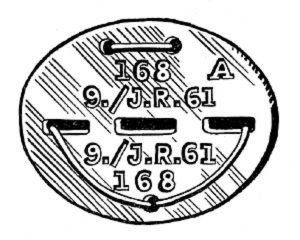 Erkennungsmarke (German Dog Tag)
From Handbook on German Army Identification, U.S. Milit...
Erkennungsmarke (German Dog Tag)
From Handbook on German Army Identification, U.S. Milit...
-
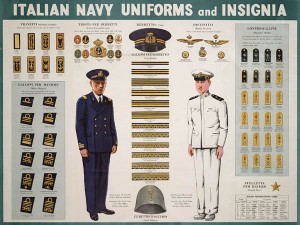 Italian Navy Uniforms and Insignia
:
CON...
Italian Navy Uniforms and Insignia
Italian Navy Uniforms and Insignia:
CON...
-
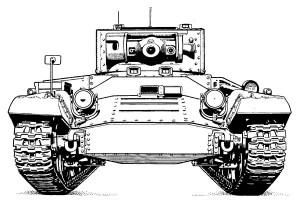 Valentine Tank Illustrations
Front and side views of the Valentine Tank (officially...
Valentine Tank Illustrations
Front and side views of the Valentine Tank (officially...
-
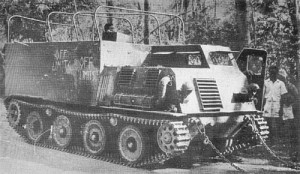 Japanese Type 1 Ho-Ki Armored Personnel Carrier
The Japanese produced a limited number of the innovativ...
Japanese Type 1 Ho-Ki Armored Personnel Carrier
The Japanese produced a limited number of the innovativ...
-
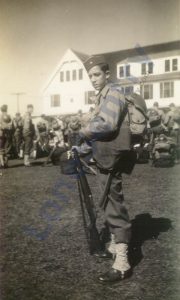 Early-War Uniform
A private photograph from 1942 showing details of the e...
Early-War Uniform
A private photograph from 1942 showing details of the e...
-
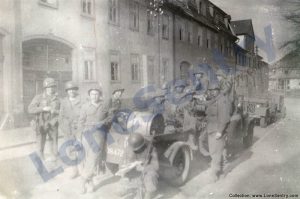 89th Infantry Division in Germany
Photographs of the U.S. Army's 89th Infantry ...
89th Infantry Division in Germany
Photographs of the U.S. Army's 89th Infantry ...
-
 Bendix Chin Turret
Bendix manual on the Operation and Maintenance of the B...
Bendix Chin Turret
Bendix manual on the Operation and Maintenance of the B...
-
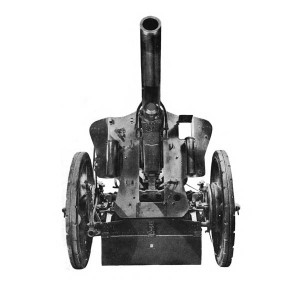 German 105-mm Howitzer
Three views of the German 105-mm howitzer (10.5 cm leFH...
German 105-mm Howitzer
Three views of the German 105-mm howitzer (10.5 cm leFH...
-
 How’s Your Sherman, Herman?
M4 Sherman Tank modification and upgrades from Army Mot...
How’s Your Sherman, Herman?
M4 Sherman Tank modification and upgrades from Army Mot...
-
Category Archives: armor
Dummy Tanks in France
A report from the Intelligence Bulletin, December 1944 on the German use of dummy Panther tanks during World War II. The report includes two photographs of a dummy tank encountered in France in 1944. DUMMY TANKS Although German use of … Continue reading
Posted in armor, intelligence reports, publications, weapons
Tagged 1944, camouflage, dummy tanks, france, normandy
Comments Off on Dummy Tanks in France
Jagdtigers Surrender to 99th Infantry Division
In April 1945, Jagdtigers (Panzerjäger Tiger Ausf. B) of s.Pz.Jäg.Abt. 512 surrended to the U.S. 99th Infantry Division in Iserlohn at the Schillerplatz. The illustrations shown here are from the WWII G.I. Stories booklet Battle Babies: The Story of the … Continue reading
Posted in armor, combat reports, photos, publications, weapons
Tagged 99th infantry division, iserlohn, jagdtiger, schillerplatz
Comments Off on Jagdtigers Surrender to 99th Infantry Division
Captured German Equipment
Wartime U.S. Army Signal Corp photographs of captured German equipment from 1944-1945 issues of the U.S. military training magazine Coastal Artillery with original captions. A Mark V, La Gleize
Posted in armor, artillery, intelligence reports, photos, weapons
Tagged captured, equipment, flak, heavy artillery
Comments Off on Captured German Equipment
Knocked-Out M4 Sherman
A knocked-out M4 Sherman abandoned at an unknown location somewhere in Europe, taken from a collection of 995th Field Artillery Battalion photographs. See also: 995th Field Artillery Battalion Photo Album. (Collection LoneSentry.com)
Captured Panzer IIIs
U.S. War Department’s Tactical and Technical Trends (No. 32, August 26, 1943) featured these photographs of a pair of German Panzer III tanks captured in North Africa.
Posted in armor, combat reports, intelligence reports, publications, weapons
Tagged armor, panzer, panzer iii
Comments Off on Captured Panzer IIIs
Subcaliber Gunnery Training
Subcaliber firing was used by the U.S. Army to develop a tank gunner’s accuracy, speed, and confidence without the costs and disturbance of firing the main armament. In general, the coaxial machine gun was used for the subcaliber training for … Continue reading
Posted in armor, miscellaneous, publications, research, training, weapons
Tagged gunnery, m4, sherman, subcaliber, tank, training
Comments Off on Subcaliber Gunnery Training
Crew of 3rd Tank Battalion, 10th Armored Division
Two photographs showing soldiers and tanks of the 3rd Tank Battalion, 10th Armored Division during training in Georgia.
90-mm vs. Panther Armor
The U.S. Ordnance Department published a handbook on the 90-mm M3 Gun which included the following photographs demonstrating the effectiveness of the 90-mm Hyper-Velocity Armor-Piercing Shot T30E16 and 90-mm Armor Piercing Shot T33 against the armor of the German Panther … Continue reading
Soviet T-26 Light Tank
German troops inspect a destroyed Russian T-26 light tank, pierced behind the turret vertical armor seam.
Replacing M4 Tank Final-Drive Assembly
Instructions for replacing the final-drive assembly on the M4 Sherman tank, from Army Motors, Vol. 6, No. 2, Maintenance Division, Office, Chief of Ordnance, May 1945. Replacing M4 Tank Final-Drive Assemblies Time was when M4 medium tanks with damaged power trains had to … Continue reading
Posted in armor, miscellaneous, publications, research, training
Tagged assembly, drive, final, m4, maintenance, mechanics, tank
Comments Off on Replacing M4 Tank Final-Drive Assembly